







 History


4675526 / 5563674
The Weimar Republic
The First Democracy in Germany
In the heart of the federal state of Thuringia, there is the small town of Weimar, in which the cultural histories of Germany and Europe are blended together in a confined space.
Weimar was home to many great personalities: Goethe, Schiller, Herder, Bach, Liszt, Wieland, Cranach … and many more. Numerous museums and memorials remind us of these names and tell of glories long past in Weimar.
In the year 1919, the first freely elected parliament, the constituent National Assembly, convened in the Deutsches Nationaltheater (German National Theatre) in Weimar and adopted the first democratic constitution in the history of Germany. At the Deutsches Nationaltheater in Weimar, the colours Black, Red, Gold were revealed on July 31, 1919 for the first time as the national flag of Germany.
The period of 1919 to 1933, in other words between the end of the emperor’s reign and the rule of National Socialism, was referred to after the Second World War as the “Weimar Republic”.
- <> Languages : DE, EN, TR
- <> Target Groups : Sek I, Sek II
- <> Subject : History
- <> Length : 23:54 min
- View in learning platform
Licenses

Curriculum-centred and oriented towards educational standards
Matching
Youth Movement
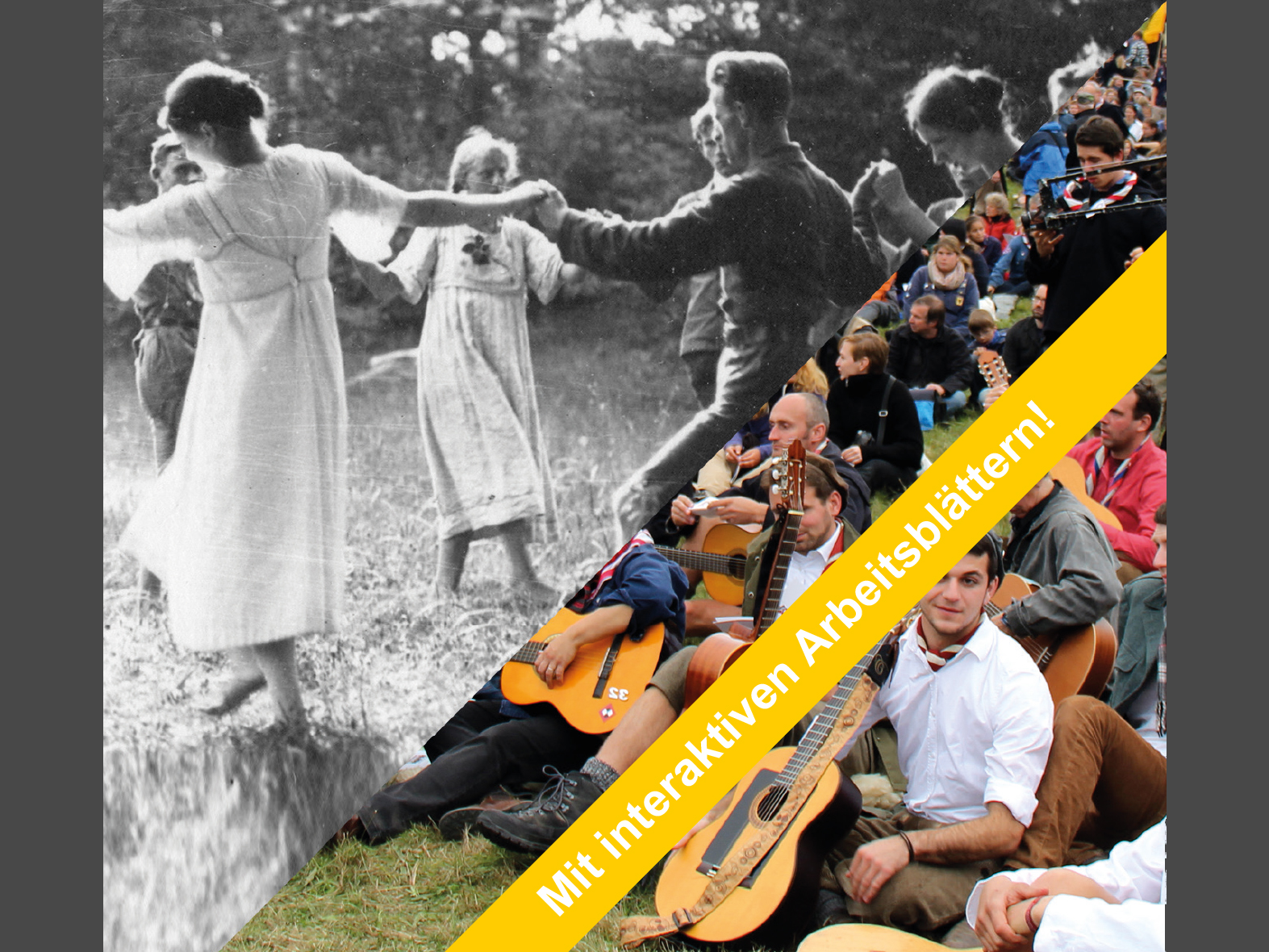
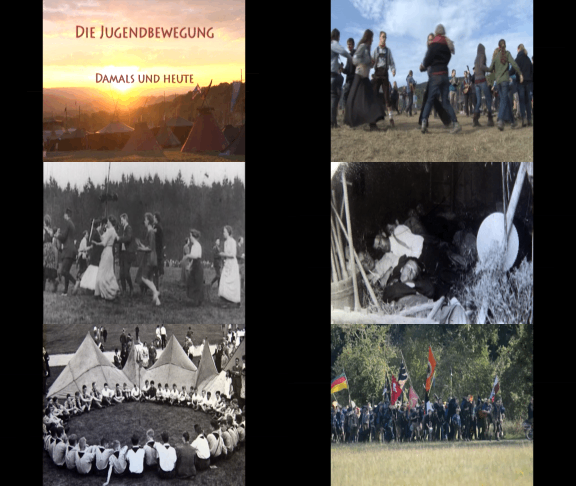
Dancing until your feet hurt: Here, at the meeting on the Hoher Meissner near Kassel, 3,500 participants from Boy Scout associations, youth and Wandervogel groups from all over the German-speaking region have gathered. They want to celebrate, simply get to know each other and commemorate a historic anniversary.


Mobile Learning II
Oh, what’s that? Original soundtrack Thissen: “As our children grow up in a media world and naturally handle the media, they should also be a topic in school.“ An older child says the point is that they don’t just load down apps but create things themselves that haven’t existed so far. Hi, I’m Jana. A propeller hat. I’ll put it on. Now I’m no longer a simple rhino, but a flying rhino. Original soundtrack Thissen: “It’s exactly the great flexibility of tablets that promotes very personalised and adapted learning.” Original soundtrack Welzel: “It’s fascinating to see how the children grow with their products and how they always want to improve them.” The Westminster Abbey is a church in London for the royal family. Original soundtrack Welzel: “And?“ They think it is ok.

Seal of approval
Quality seals such as the "Bio-Siegel", "Blauer Engel", "Stiftung Warentest" and up to 1,000 other seals represent characteristics such as sustainability, health or safety with regard to a product, a service or even a company.