






 Media Education, Society, Training of Teachers

4667125 / 5558688
Interactive Whiteboards
Teaching – Creating – Presenting
Although the computer found its way into school some time ago already, it has mostly led a marginal existence so far, banished to extra practice rooms or to the side of the classroom. With the new medium of the interactive whiteboard the computer promptly becomes the focus of the lessons as the central hub. On the digital board that projects contents via a beamer like on an oversized computer monitor, pictures and texts as well as audio and video files can be displayed. The possibilities of representation on this new white board, the whiteboard, seem to be almost unlimited compared to the traditional blackboard. But with the help of the board things cannot just be better represented, the computer-connected board can, in addition, be used by teachers and pupils as a universal tool. On it, content in a new – that is interactive – form can be searched online, organised and presented in the classroom.
Play trailer
Curriculum-centred and oriented towards educational standards
Matching

Mobile Learning II
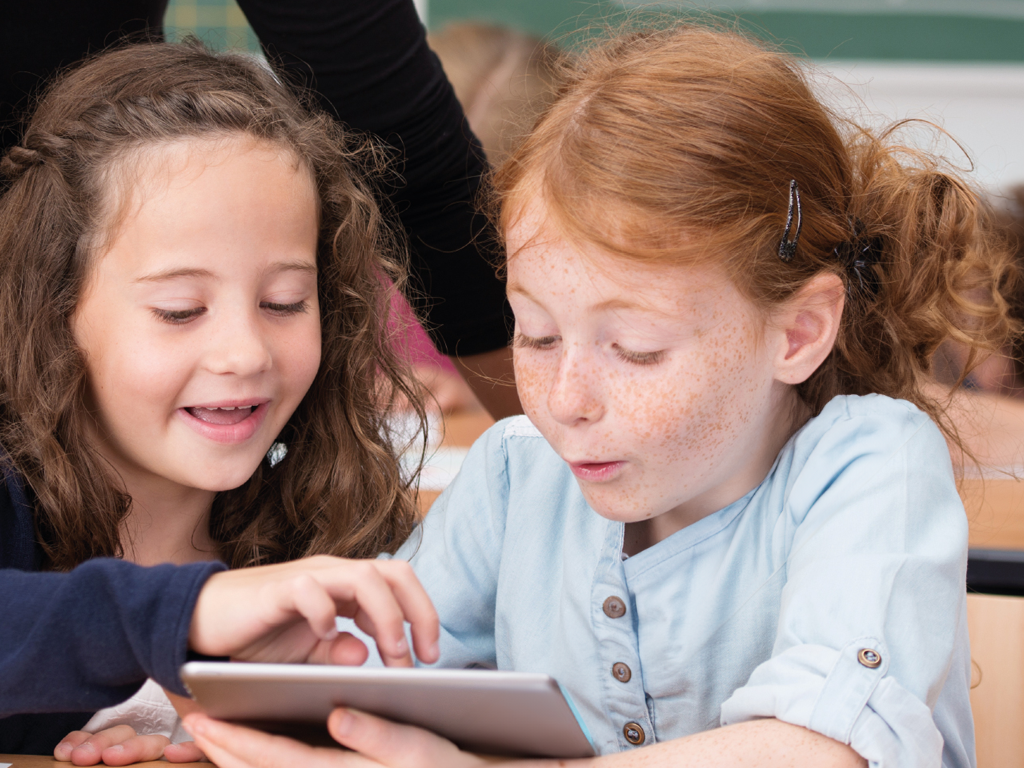
Oh, what’s that? Original soundtrack Thissen: “As our children grow up in a media world and naturally handle the media, they should also be a topic in school.“ An older child says the point is that they don’t just load down apps but create things themselves that haven’t existed so far. Hi, I’m Jana. A propeller hat. I’ll put it on. Now I’m no longer a simple rhino, but a flying rhino. Original soundtrack Thissen: “It’s exactly the great flexibility of tablets that promotes very personalised and adapted learning.” Original soundtrack Welzel: “It’s fascinating to see how the children grow with their products and how they always want to improve them.” The Westminster Abbey is a church in London for the royal family. Original soundtrack Welzel: “And?“ They think it is ok.
Peer Mediation
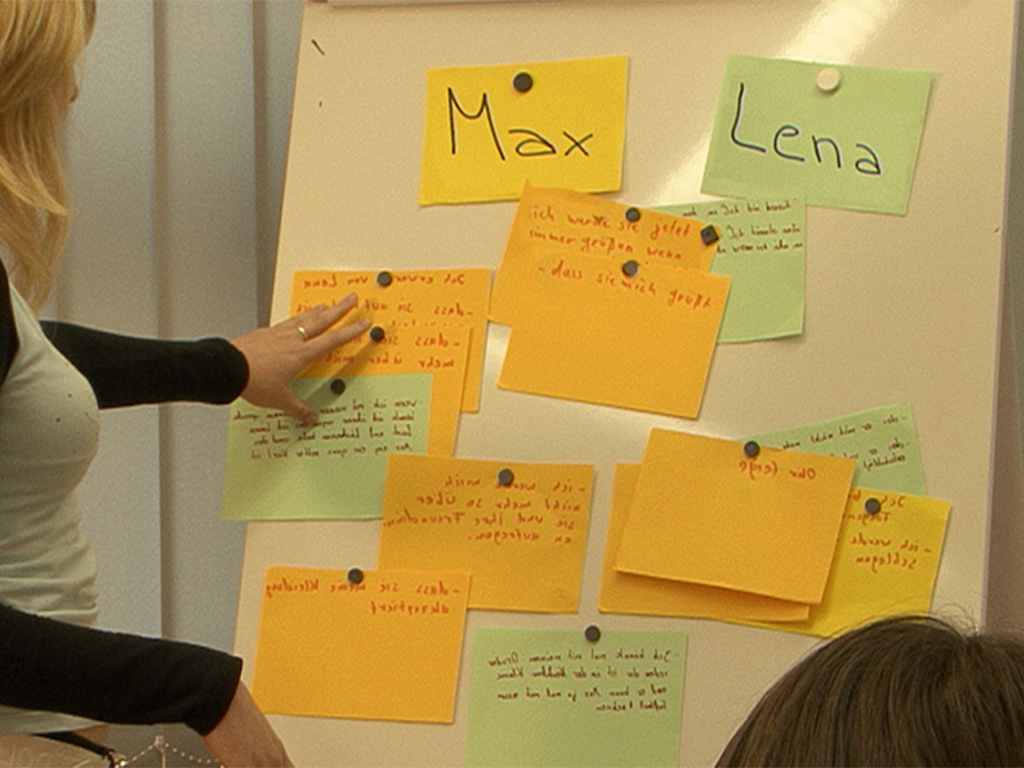
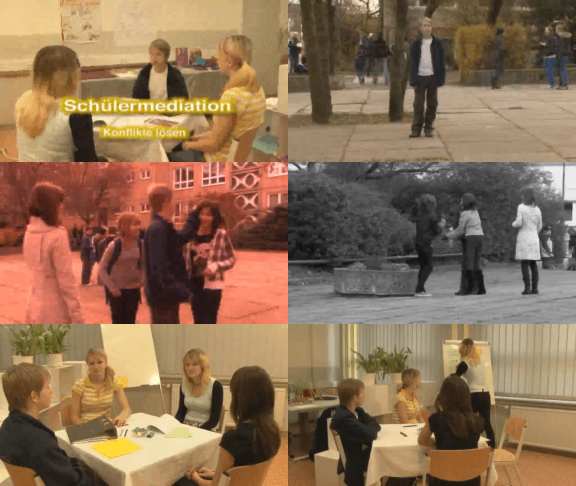
Lena and Max attend the 7th form. Max is new in class. During a break, Max notices that Lena and her friend are laughing at him again. Max loses his temper! He slaps Lena in the face. That hurts and Lena runs back into the classroom with a red cheek. The growing conflict between the two has escalated. Just like Lena and Max, every day pupils all over Germany have rows with each other. At the Heinrich Hertz Gymnasium in Thuringia, pupils have been trained as mediators for years. At set hours, they are in a room made available by the school specifically for mediation purposes. The film describes the growing conflict between Max and Lena and shows a mediation using their example. In doing so, the terms “conflict” and “peer mediation” are explained in a non-technical way. The aims of peer mediation and its progress in five steps as well as the mediators’ tasks are illustrated. The art of asking questions and “mirroring”, which the mediators must know, is described and explained. Together with the comprehensive accompanying material, the DVD is a suitable medium to introduce peer mediation at your school, too.
Big Data
Original soundtrack young woman: