







55505927
EduBreakout Grundrechenarten
In 10 interativen Aufgaben lösen die Schüler:innen Rechnungen mittels der vier Grundrechenarten.
In 10 verschiedenen Aufgaben mit Unteraufgaben werden die Schüler:innen auf Rechen-Rätseltour geschickt.
Neben Aufgaben, aufgemacht als Lesespurgeschichten, wird kräftig addiert, subtrahiert, multipliziert und dividiert. Alle Lösungen sind Teil des Ganzen.
Ob in der Gruppe oder allein … die Aufgaben vermitteln neben mathematischen Kenntnissen Zusatzinformationen und verbinden Logik, Rechenkunst und Spaß!
Das Medium bietet H5P-Aufgaben an, die ohne zusätzliche Software verwendbar sind.
Durch interaktive Aufgabentypen wird das audiovisuelle und interaktive Lernen einfach.
Lernen macht jetzt Spaß!
Included Tasks
- I Der Dachboden
- II Die Fähre
- III Das Schließfach
- IV Der Leuchtturm
- V Das U-Boot
- VI Das Meeresmuseum
- VII Der Strand
- VIII Kunst der Westküste
- IX Der geheime Raum
- X Zollstraße
Curriculum-centred and oriented towards educational standards
Matching
Rationale Zahlen, Maßeinheiten & Anteile
In unserem Arbeitsheft Mathematik 5, Vol. 1 – Rationale Zahlen, Maßeinheiten & Anteile finden Sie 50 interaktive und didaktisch aufbereitete Aufgaben.
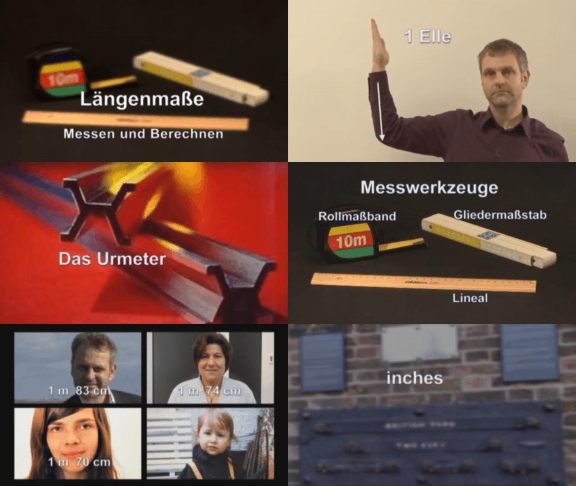
Units of Length
The DVD starts with a look back into the past. How did peop- le measure in former times? What historical units of measure- ment were there? What is the standard metre? Since when has there been a system of units? Subsequently, the units of measurement – metre (m), centimetre (cm), milllimetre (mm), decimetre (dm) and kilo- metre (km) – are examined more closely. In a third chapter, an overview of the conversions is presented and their systematics explained. Decimal points and the prefixes are clearly illustrated. Then the DVD offers a digression visiting other countries and their length units. America and Great Britain, with inches, feet, yards and miles, play a central role. In the fifth chapter, calculations using scales are presented. Here the focus is laid on scales in maps, but also scaling down and up are dealt with. In the last chapter, circumferences of rectangles and squares are measured and calculated with various examples.
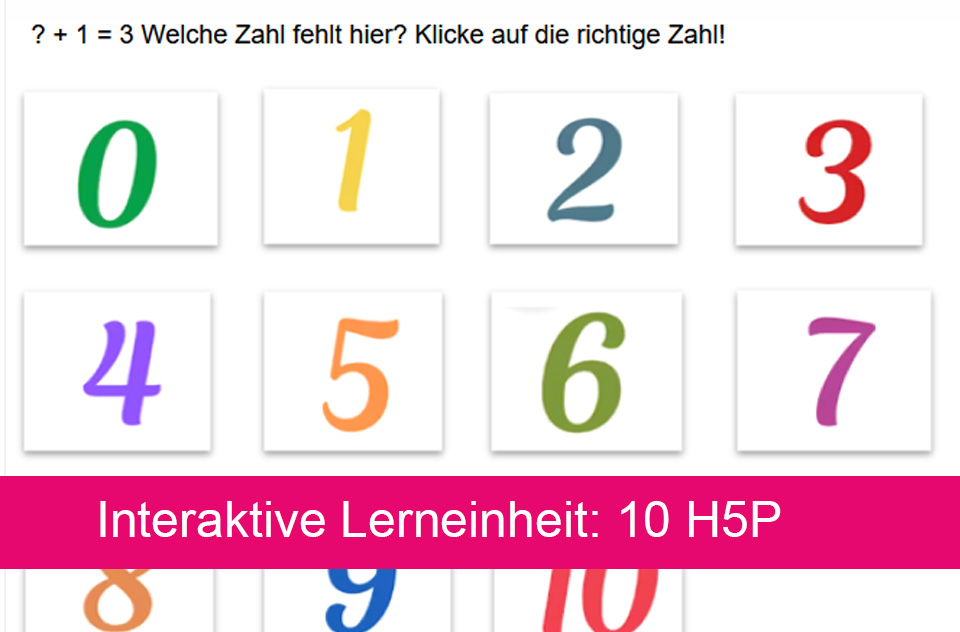
Mathematics learning unit 1/2
In our interactive learning unit "Mathematics 1/2 - Calculating up to 10" you will find 10 interactive and didactically prepared tasks on basic arithmetic operations in the number range up to 10.