







 Primary School

4677064 / 5564359
Zoo Learning
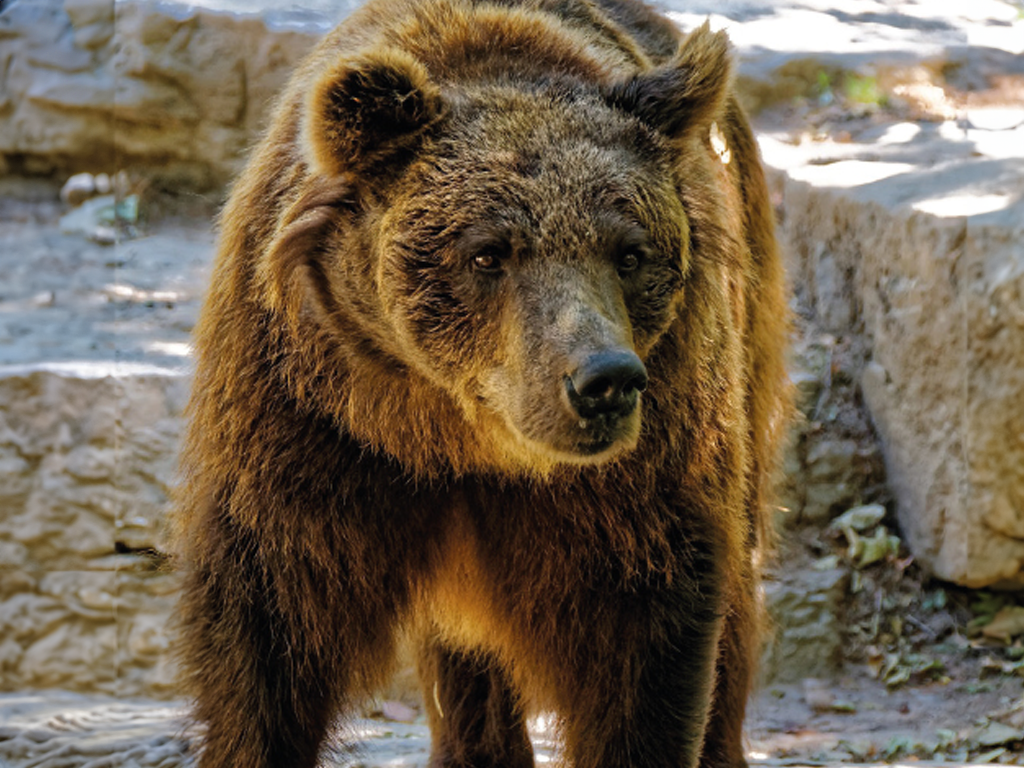
Brown Bear, Wolf and Eagle Owl
Seeing animals close up on a trip right in the middle of the city – this is possible on a visit to the zoo.
There we can see many animals that cannot be found in the wild around here as a rule.
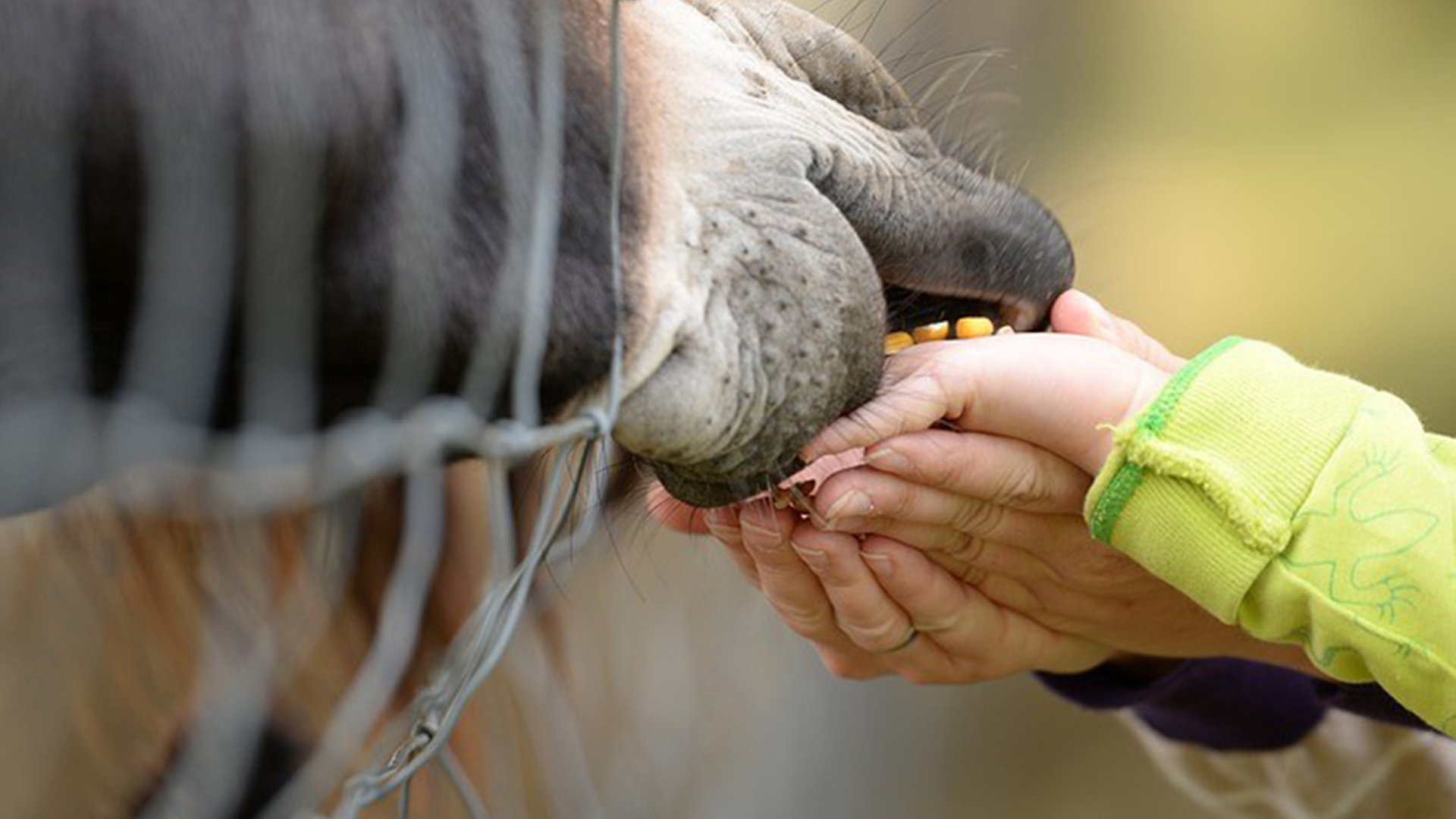
From small to large, dangerous animals, harmless animals, and some you can stroke.
Animals that attract attention through their outward appearance and those that are difficult to see in their environment.
In the zoo, the animals are kept in enclosures. In this way you can see them close up and they cannot pose any risk to people.
In Munich, the chimpanzees live in a large outdoor enclosure which has been recreated amazingly similar to their natural home.
Zenta and Seppi are enjoying their food and watching the visitors.
Chimpanzees are the closest relatives of humans.
Mammals have the same body temperature all the time, whether they live in cold or hot climates.
Most mammals are land animals but some have also adapted to life in water. The front and hind legs of seals, for example, have become flippers in the course of their evolution.
Other mammals live in the air.
With the folds of skin stretched between their front and hind legs, bats and flying foxes, for example, can fly.
Mammals on land move around in three different ways:
Plantigrades:
They walk with the entire sole of the foot flat on the ground.
The digitigrades walk solely on their toes. That is the way a lynx walks, for example.
Then there are the unguligrades, which move around on the tips of their toes only. Among them is the ibex, for example.
There are about 6,600 different mammal species. For more detailed information, see here: https://worldanimalfoundation.org/advocate/how-many-animals-are-in-the-world/
They are the most advanced vertebrates of all species. In the course of evolution the brain, in particular, has developed greatly.
The biggest mammal in Europe is the wisent. It reaches a height of up to two metres and a weight of up to 450 kilos.
The wisent, a breed of cattle which is related to the American bison, is a good example of the useful work of the zoo, because it was already considered extinct.
In the twenties there were only a few animals living in zoos.
Protected by the zoo, the animal population could recover and today, there are again more than 1,000 animals.
- <> Languages : DE, EN
- <> Target Groups : GRU
- <> Subject : Primary School
- <> Length : 22.57 min
- View in learning platform
Licenses
Curriculum-centred and oriented towards educational standards
Matching

Copyright
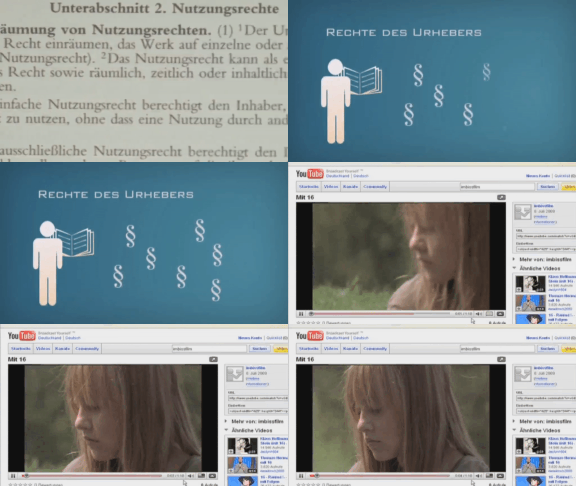
Copyright is subject to constant change to keep up with technological advances. This film enables the viewer to grasp the basic principles of this extremely intricate matter. By way of introduction, the film defines what an author is, what kinds of works there are and how long a work is protected on principle. Then the fundamental rights of an author are cited and it is shown how these are exploited in our times. In the third chapter, the respective rights are illustrated by way of practice-oriented examples of books, photos, music and films. Here, of course, an emphasis is laid on the field of education, taking into account the latest case law within the EU and Austria in particular. A further chapter highlights the problems arising with the Internet and goes into the citation law and pirate copies. All in all, in this way the viewer is made familiar with the most important basic terms and their meanings. Comprehensive worksheets and additional accompanying material invite us to deepen our knowledge of the subject.

Internet Addiction
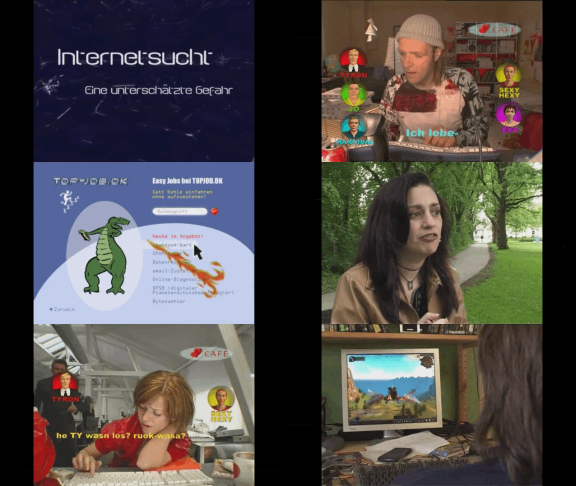
The film consists of two parts. The first part is the 15-minute short film “In the Net”. It describes the problem of excessive Internet use in a humorous way, in particular the risk of losing touch with reality when chatting. The second part illustrates with three real persons how Internet addiction can develop and the problems encountered by those who are afflicted. The authentic statements are commented by an experienced therapist. For many pupils, the issues addressed here are related to their everyday lives. What is a “sensible” use of the Internet, where does pathological addiction start? In contrast to addiction to alcohol, nicotine or drugs, the public seems to be largely ignorant of the problem of this addiction, which is not related to any substance abuse. The film provides material for discussion in the classroom (crossdisciplinary) and can be used as a basis for the formulation of prevention strategies.

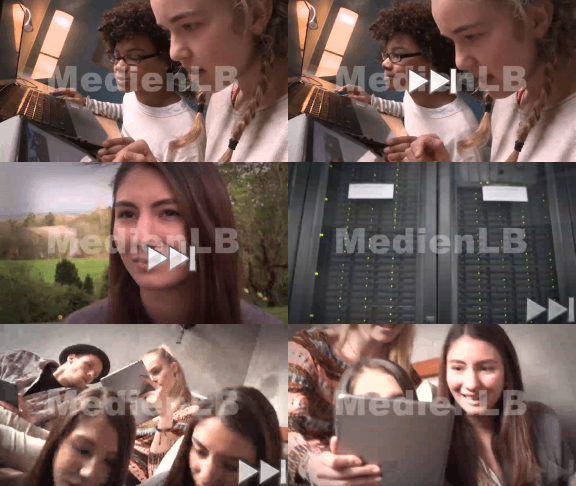
Big Data
Original soundtrack young woman: