







 Biology

4678993 / 5565753
Starling
Bird of the Year
In general, male and female starlings look very much alike. In spring, starlings assume their nuptial plumage, in autumn, after moulting, they wear their eclipse plumage.
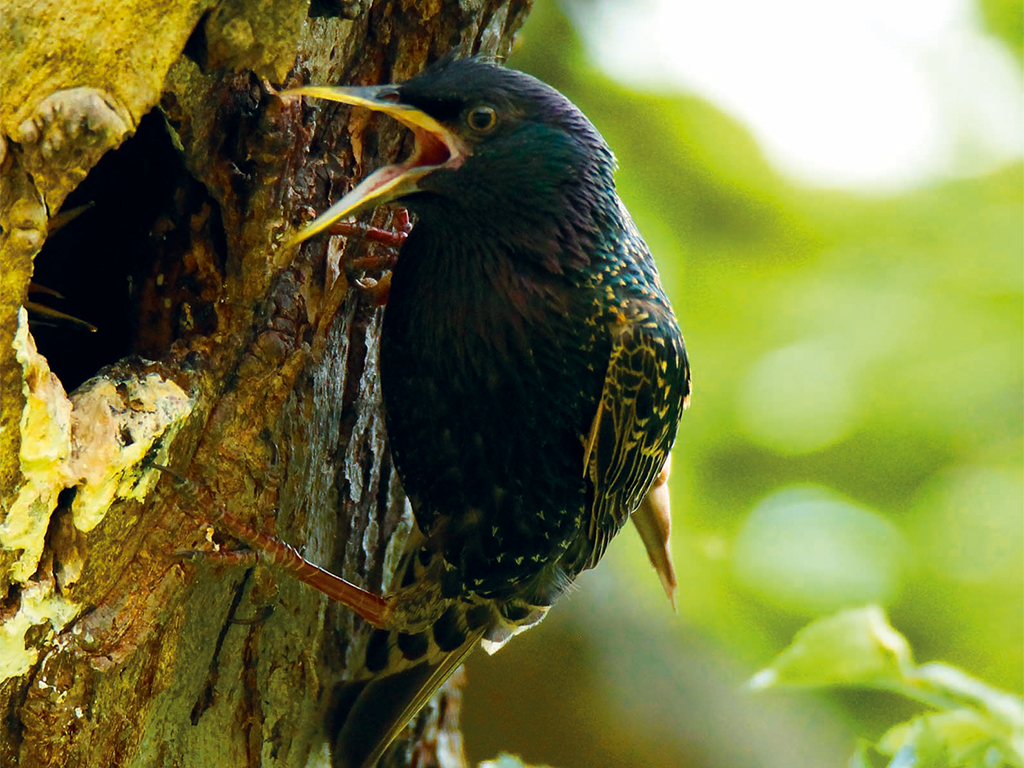
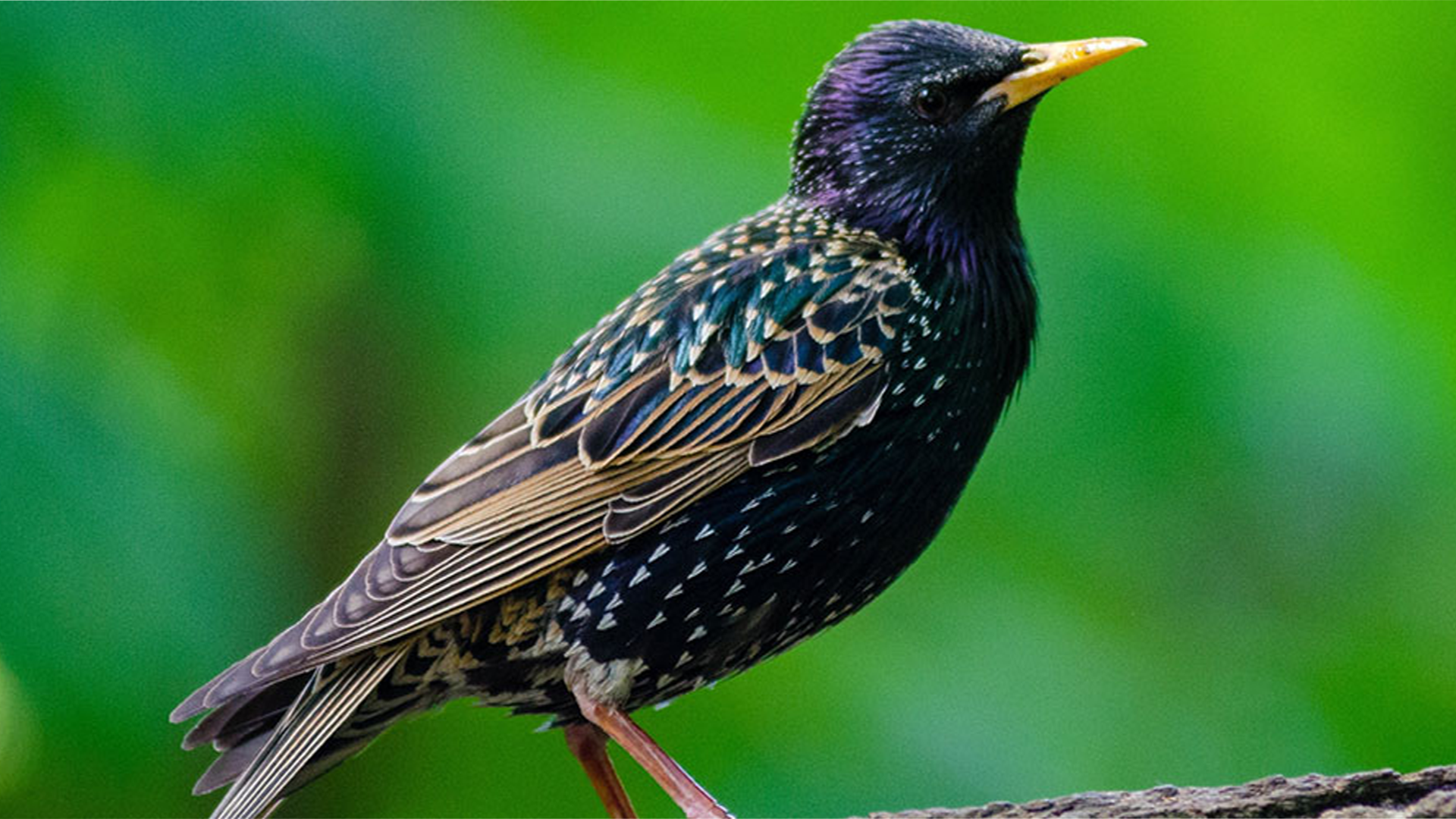
The nuptial plumage of spring consists of black feathers that have a green, blue and violet metallic sheen. Females then have bright spots on the upper side of the feathers. Both sexes have a yellow bill with a light blue base for the males and a reddish one for the females.
Details of this plumage can be recognised especially clearly in this starling in the NABU Bird Protection Centre in Mössingen. It has a bill injury which is being treated here before it is released again.
The starling has a length of about 20 centimetres. It is between a parrow and a blackbird in size. It could be mistaken for a blackbird male at the most. But blackbirds have no shining plumage and, moreover, a longer tail.
Its almost triangular wings are rather short compared with birds of a similar size. As short-distance or medium-distance migrants, starlings do not have to cover long distances. Their wings are broad since they mostly inhabit the open countryside. Compared to them, blackbirds have longer and narrower wings with which they can fly better in the dense forest.
Starlings fly with rapid and strong wing beats. Gliding flight is used before landing.
- <> Languages : DE, EN
- <> Target Groups : GRU, Sek I
- <> Subject : Biology
- <> Length : 21:47 min
- View in learning platform
Licenses
Curriculum-centred and oriented towards educational standards
Matching
Ceramic
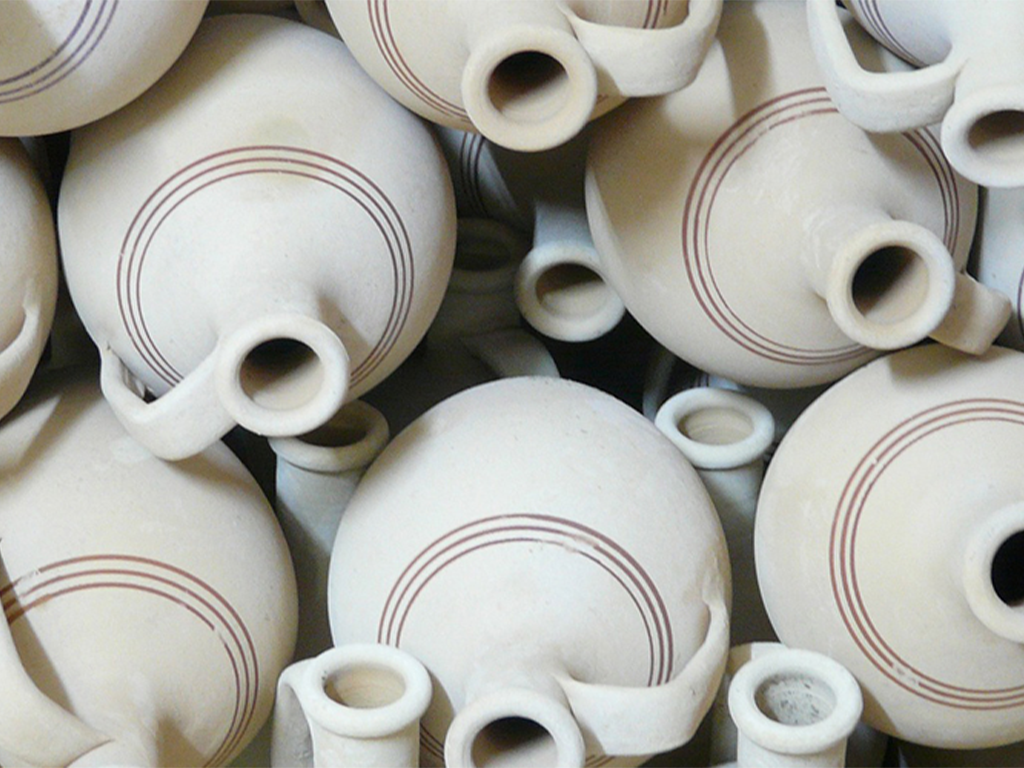
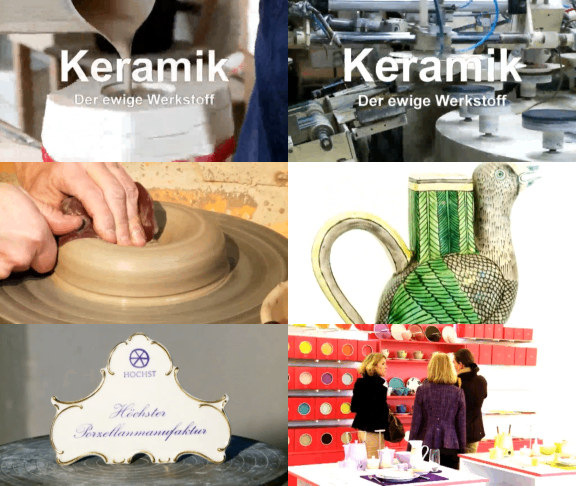
Ceramics are indispensable in our everyday lives. We eat from ceramic plates, drink from ceramic cups, use tiled ceramic bathrooms. But how is ceramic manufactured? The film reveals the secrets of this fascinating material! We get to know more about the beginnings of ceramic in the Old World of Egypt and Mesopotamia, about Greece, China and Rome. We gain interesting insights into the valuable earthenware and are also shown the exquisite further development of the "white gold". Today this versatile material is irreplaceable in industry, too. Whether in space or as an easily compatible substitute in medicine, ceramic is applied in many places.

Internet Addiction
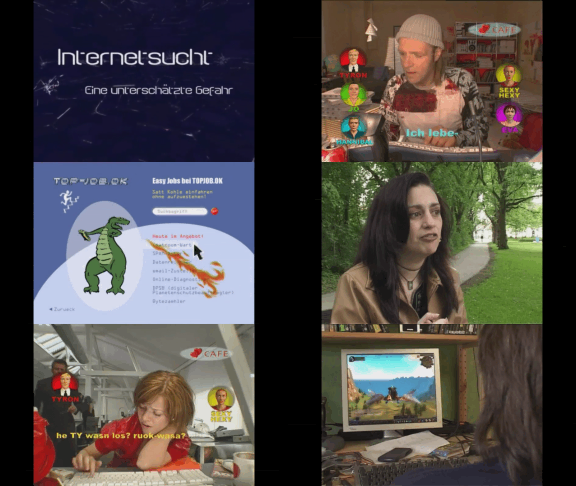
The film consists of two parts. The first part is the 15-minute short film “In the Net”. It describes the problem of excessive Internet use in a humorous way, in particular the risk of losing touch with reality when chatting. The second part illustrates with three real persons how Internet addiction can develop and the problems encountered by those who are afflicted. The authentic statements are commented by an experienced therapist. For many pupils, the issues addressed here are related to their everyday lives. What is a “sensible” use of the Internet, where does pathological addiction start? In contrast to addiction to alcohol, nicotine or drugs, the public seems to be largely ignorant of the problem of this addiction, which is not related to any substance abuse. The film provides material for discussion in the classroom (crossdisciplinary) and can be used as a basis for the formulation of prevention strategies.
Inclusion
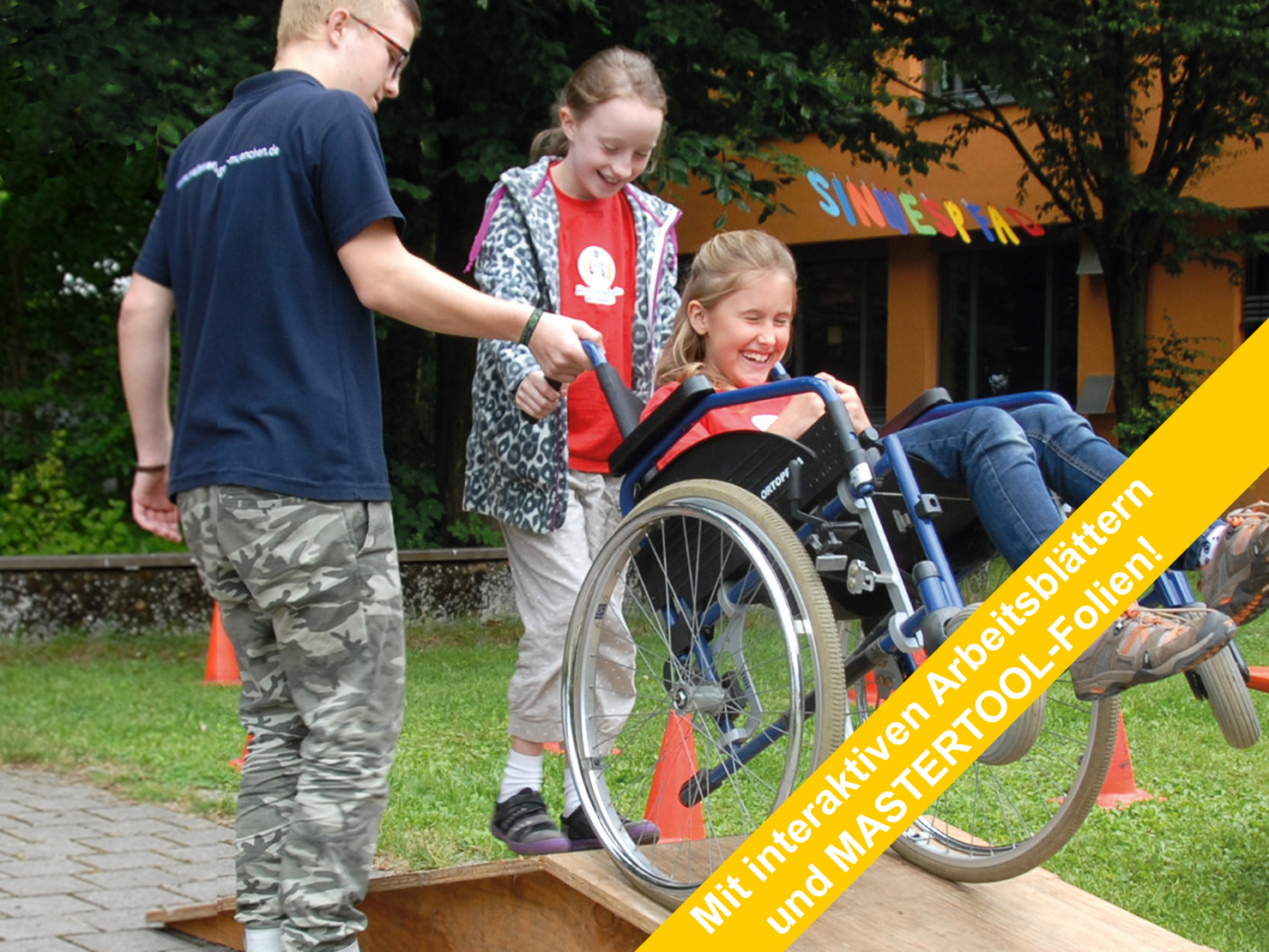
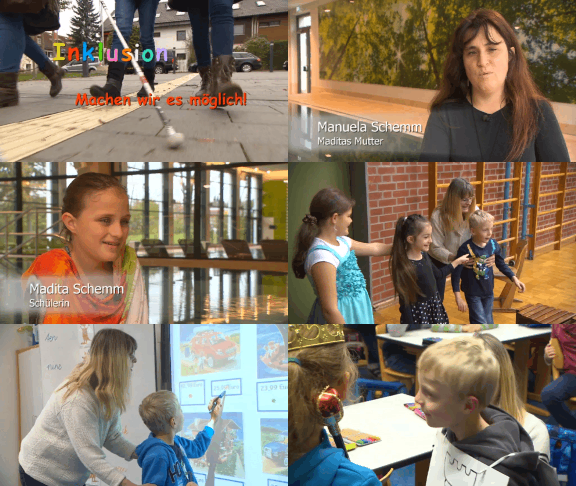
Madita is eleven and blind. She does not want to go to a special school but to a regular grammar school. She says she feels "normal" there. Jonathan is eight and has a walking disability. He likes going to the school where he lives. Here, his best friend sits next to him. Max Dimpflmeier, a teacher who is severely deaf, explains that school life is not easy. Quote Max Dimpflmeier: "You don't want to attract attention, you want to avoid saying that it is necessary for you that 70 people adjust to your situation." People on their way to inclusion.