







 Primary School


4658330 / 5551750
Postal Service
How Are Letters and Similar Postal Article
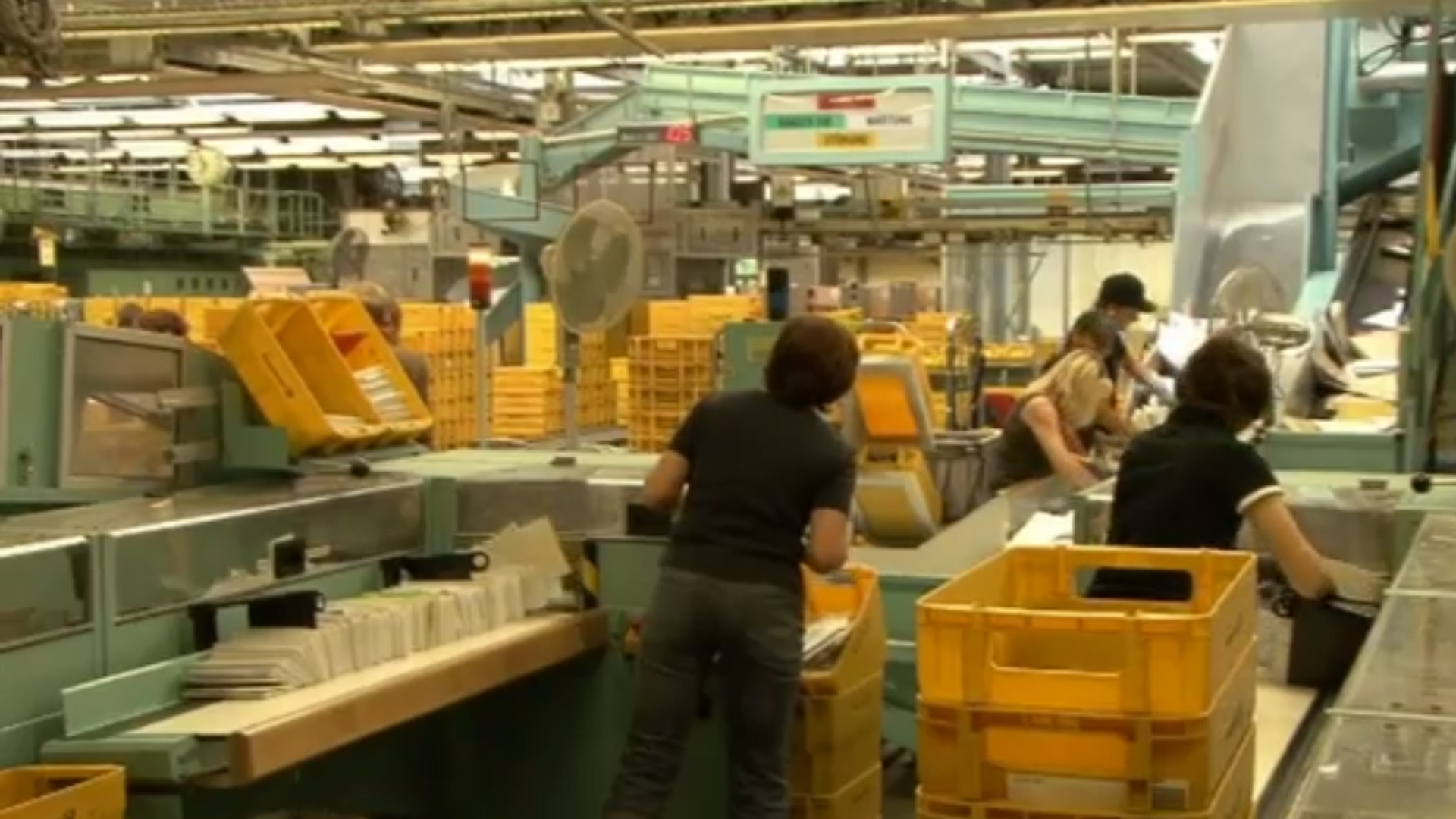
The postal service as an organisation for the delivery of news and retail goods through letters, postcards, parcels and packages is considered a part of the pupils‘ life experience and thus dealt with at primary school. This film is meant to illustrate this important procedural part of the children‘s lives and to make it intelligible to them. It deals with the writing, addressing, stamping and sending of a letter, with the importance of stamps, with the letter box and its emptying and the journey of a letter or a package from the sender to the addressee. Both as an introduction to the topic and as a tool in the hands of the pupils when working individually or preparing projects, the DVD and the didactically arranged accompanying material are perfectly suited for the classroom. A short excursus on the history of the stamp and a glance behind the scenes of a letter centre as well as a sorting centre, which usually cannot be visited, complete this informative DVD on the postal service.
Play trailer
- <> Languages : DE, EN, TR
- <> Target Groups : FÖ, GRU
- <> Subject : Primary School
- <> Length : 20:57 min
- View in learning platform
Licenses
Curriculum-centred and oriented towards educational standards
Matching
Stalking
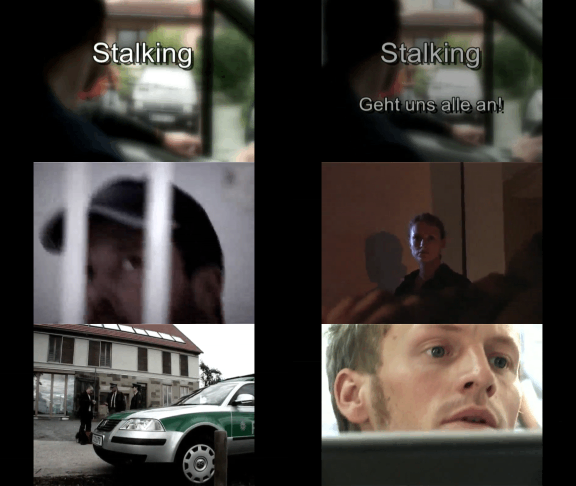
n Germany, 12 % of all federal citizens are pursued by a stalker once in their lives. And not only celebrities are among their victims! Everyone may be confronted with such a situation.

Product Piracy
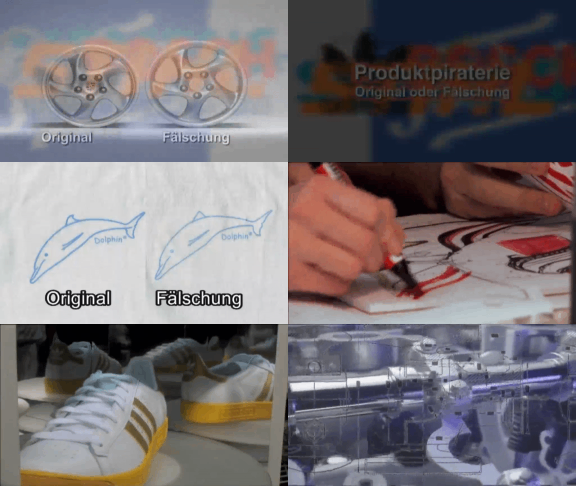
Counterfeiting takes place in almost all economic sectors – textiles, watches, car parts, machine parts, tools, accessories, software and medicines. Some counterfeits are easy to recognise, others are so well-executed that even experts have difficulty distinguishing between original and imitation. This DVD covers the development of a product from idea to manufacture. Once a product has become a trademark, product pirates appear on the scene.


Blogging
The weblog or blog, for short, as a medium is not much older than this century. Blogs came into being in the World Wide Web as ’messages from below’, as web pages from web creators who wanted to share their view of the world with the world. They are short notes, long texts, pictures, videos, which are posted loosely and at random intervals to the world for an undefined public.