







 Biology
4667156 / 5558682
Du bist nie allein
Viren und Bakterien in uns
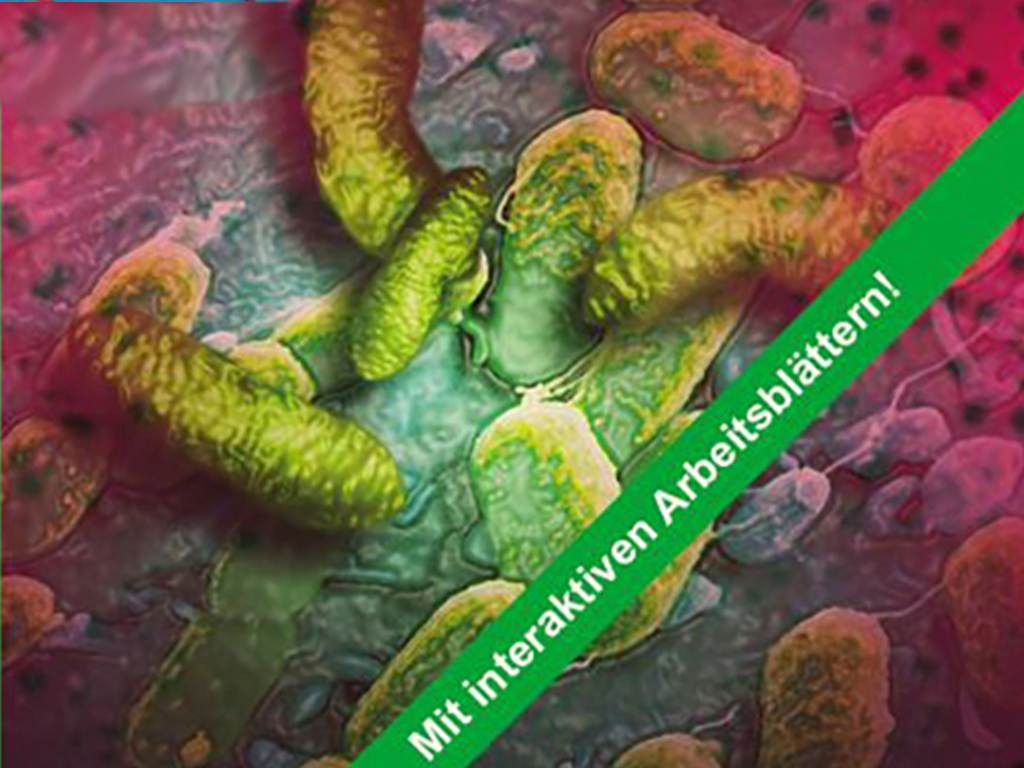
Schau dich schlau!“ begibt sich auf eine Reise in den Mikrokosmos unseres Körpers. Joey Grit Winkler und Fero Andersen stellen einige der bizarren Kreaturen vor, die auf und in uns zu Hause sind. Sie analysieren den „Lebensraum Mensch“ und zeigen, dass auf zwei Quadratzentimetern unserer Haut mehr Mikroben leben als Menschen auf der Erde.
Dabei räumen sie mit dem Irrglauben auf, dass alle diese kleinen Monster schädlich sind und beweisen sogar das Gegenteil. Die meisten Bakterien, Mikroben und Amöben unterstützen unsere Gesundheit! Ob Kühlschrank, Küchenschwamm oder Spülbecken: In unserer Küche wimmelt es von Bakterien und anderen Kleinstlebewesen. Manche der winzigen Monster sind wahre Killer.
„Schau dich schlau!“ taucht ein in die Schlupfwinkel unserer unsichtbaren Untermieter. Joey Grit Winkler und Fero Andersen zeigen, wie man mit den ungeliebten Bewohnern unseres alltäglichen Umfelds umgehen muss. Außerdem besucht „Schau dich schlau!“ einen Flohzirkus und eröffnet den Zuschauern eine faszinierende und völlig fremde Welt. Darin tanzen Flöhe Ballett, spielen Fußball oder jonglieren mit Gegenständen, die vielfach schwerer sind als sie selbst.
Curriculum-centred and oriented towards educational standards
Matching


Mobile Learning II
Oh, what’s that? Original soundtrack Thissen: “As our children grow up in a media world and naturally handle the media, they should also be a topic in school.“ An older child says the point is that they don’t just load down apps but create things themselves that haven’t existed so far. Hi, I’m Jana. A propeller hat. I’ll put it on. Now I’m no longer a simple rhino, but a flying rhino. Original soundtrack Thissen: “It’s exactly the great flexibility of tablets that promotes very personalised and adapted learning.” Original soundtrack Welzel: “It’s fascinating to see how the children grow with their products and how they always want to improve them.” The Westminster Abbey is a church in London for the royal family. Original soundtrack Welzel: “And?“ They think it is ok.
Seal of approval
Quality seals such as the "Bio-Siegel", "Blauer Engel", "Stiftung Warentest" and up to 1,000 other seals represent characteristics such as sustainability, health or safety with regard to a product, a service or even a company.

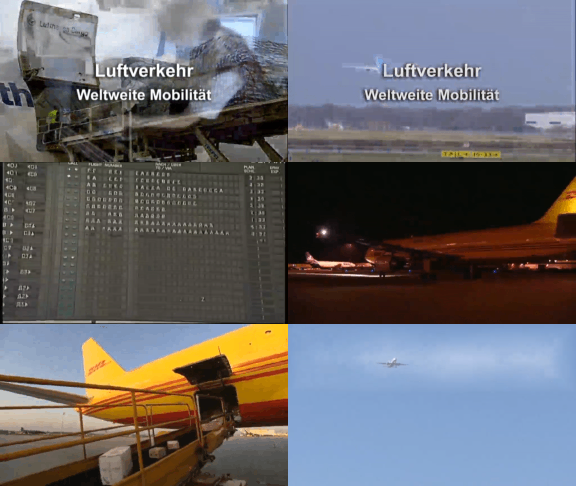
Air Traffic
Being able to fly has been a dream of humanity from time immemorial. But it does not even date back a century that people actually started being able to travel through the air. Since the 1960s, the number of flight passengers has been constantly increasing. Thus, the airspace is no longer dominated by birds but by man-made flying objects.