







 Geography

46502141 / 55502199
Desert
Types, Vegetation, Fauna
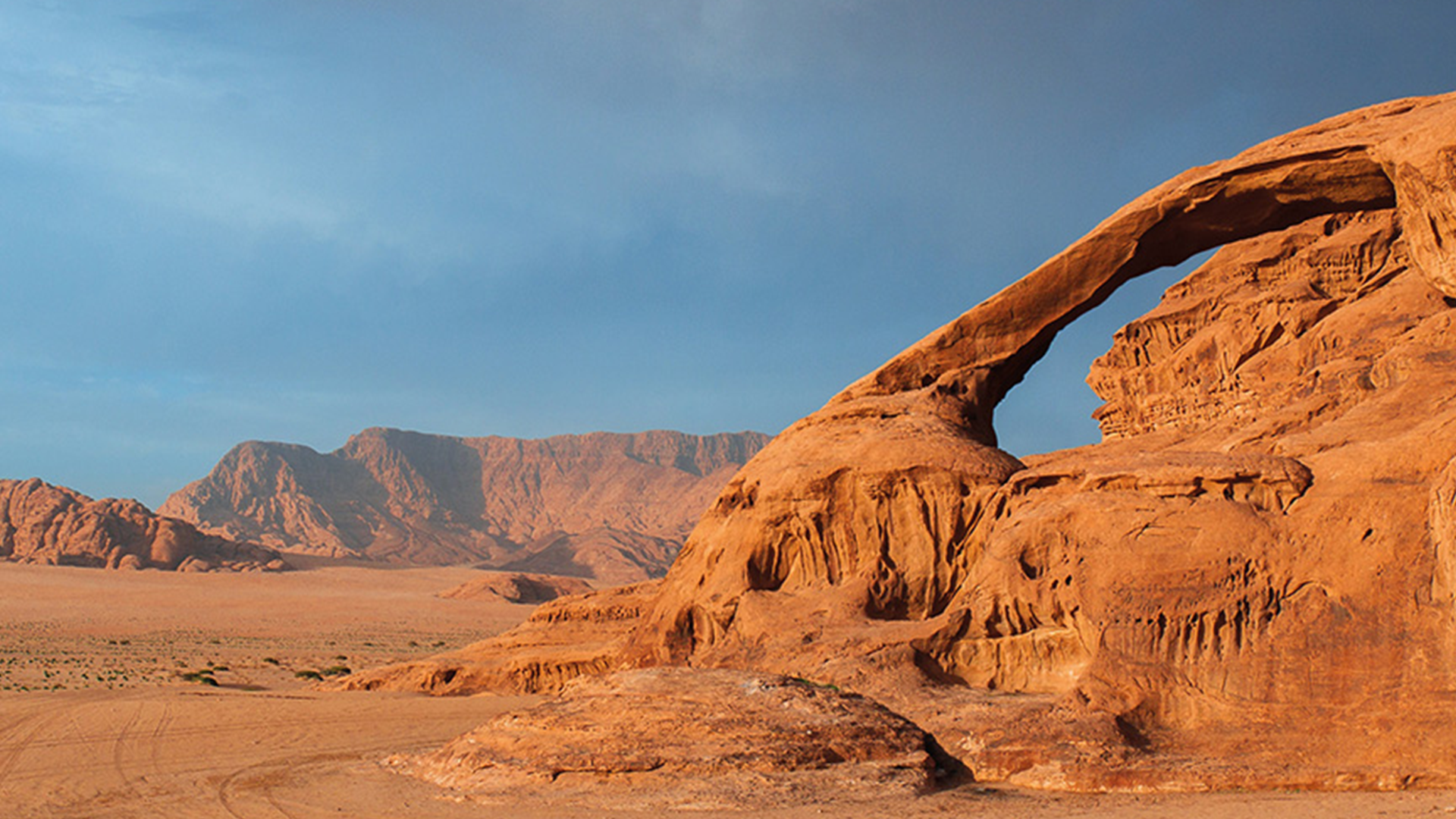
Deserts and semi-deserts cover roughly a third of the entire landmass of the Earth. A huge area of our planet is thus defined as an arid region.
But what exactly are arid regions and are they similar everywhere?
In general, landscapes where only highly specialised plants or no plants at all can grow due to their extreme dryness are referred to as arid regions.
Therefore, cold deserts also fall into this category.
Although they have water, it is frozen due to the cold and thus not available for plants. In addition, the lack of vegetation is caused by the lack of warmth.
The marginal zones of the polar regions Arctic and Antarctica i.a. count among the cold deserts, but also the alpine cold deserts of high mountains.
The picture is entirely different with arid deserts.
In arid deserts, little precipitation and a high rate of evaporation are mainly responsible for the lack of an extensive vegetation cover.
Most arid deserts stretch out around the globe in two broad dry belts north and south of the equator.
Curriculum-centred and oriented towards educational standards
Matching


Blogging
The weblog or blog, for short, as a medium is not much older than this century. Blogs came into being in the World Wide Web as ’messages from below’, as web pages from web creators who wanted to share their view of the world with the world. They are short notes, long texts, pictures, videos, which are posted loosely and at random intervals to the world for an undefined public.
Inclusion
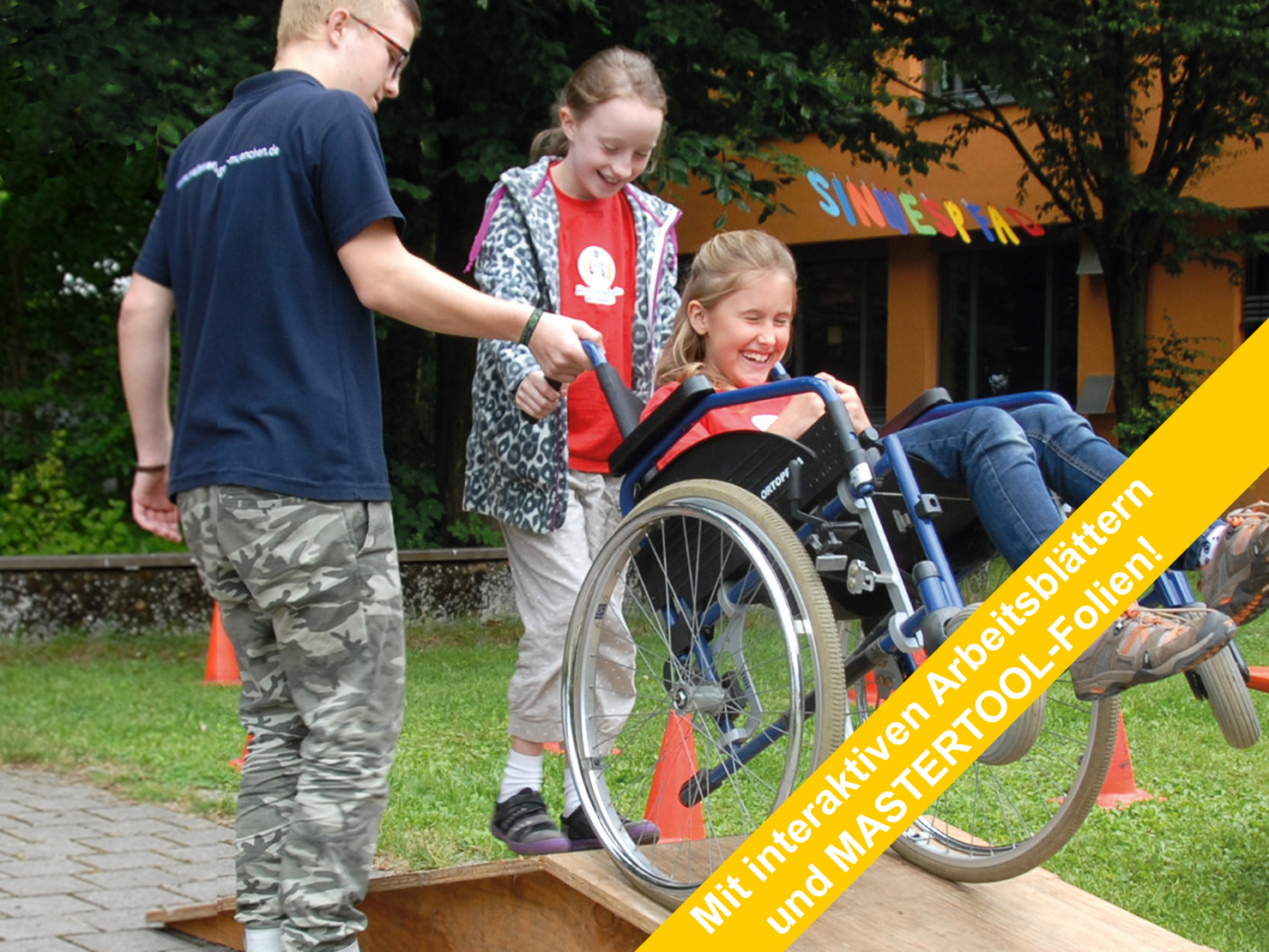
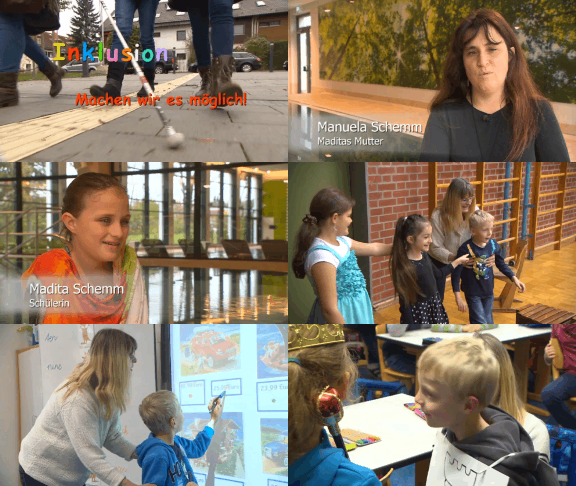
Madita is eleven and blind. She does not want to go to a special school but to a regular grammar school. She says she feels "normal" there. Jonathan is eight and has a walking disability. He likes going to the school where he lives. Here, his best friend sits next to him. Max Dimpflmeier, a teacher who is severely deaf, explains that school life is not easy. Quote Max Dimpflmeier: "You don't want to attract attention, you want to avoid saying that it is necessary for you that 70 people adjust to your situation." People on their way to inclusion.

Computer Games
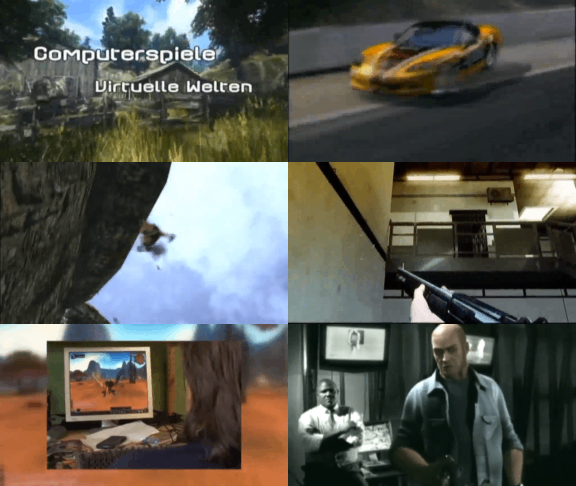
This film covers the topic of computer games in a variety of ways and from many different angles. Apart from the fascina- tion of computer games for users, the historical development as well as the production of computer games are described. The established genres are introduced, the guidelines of the German BPjM are explained. In light of recent public discussions, a neutral overview of the pros and cons of playing computer games is given, and different kinds of player behaviour are outlined. In this film, the pupils will recognise many aspects of their favourite pastime that encourage an independent, constructive use of this medium and reinforce their media competency. The film and teaching material are very closely related to the real-life situation.