







 Chemistry


4677115 / 5564404
Alkali Metals
Properties, Examples, Relationship
What do lithium batteries, table salt and firework rockets have in common?
All of them contain compounds of alkali metals. Alkali metals are members of the first group of the periodic table of the elements. The metals in this group are lithium, sodium, potassium, rubidium, caesium and francium.
The word “alkali“ is derived from the Arab “al-qalya“ for potash, the colloquial term for potassium carbonate.
In this film we want to take a closer look at the representatives of this family of elements, compare their properties, investigate the chemical behaviour and see where we encounter their chemical compounds in everyday life.
Alkali metals and alkaline solutions – also called basic solutions – are noxious for the skin. Therefore, additional protective gloves should be worn – apart from the obligatory protective goggles required in laboratory work.
- <> Languages : DE, EN
- <> Target Groups : Sek I, Sek II
- <> Subject : Chemistry
- <> Length : 20:07 min
- View in learning platform
Licenses

Curriculum-centred and oriented towards educational standards
Matching
Rights and Obligations
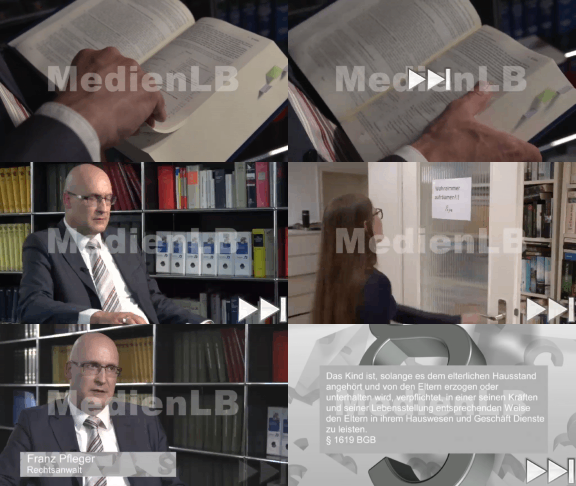
Three girls of different ages: Anna is 17, Paula 15 and Lena 13. Before the law, their respective ages have consequences – because children and adolescents have different rights and also obligations.
Inclusion
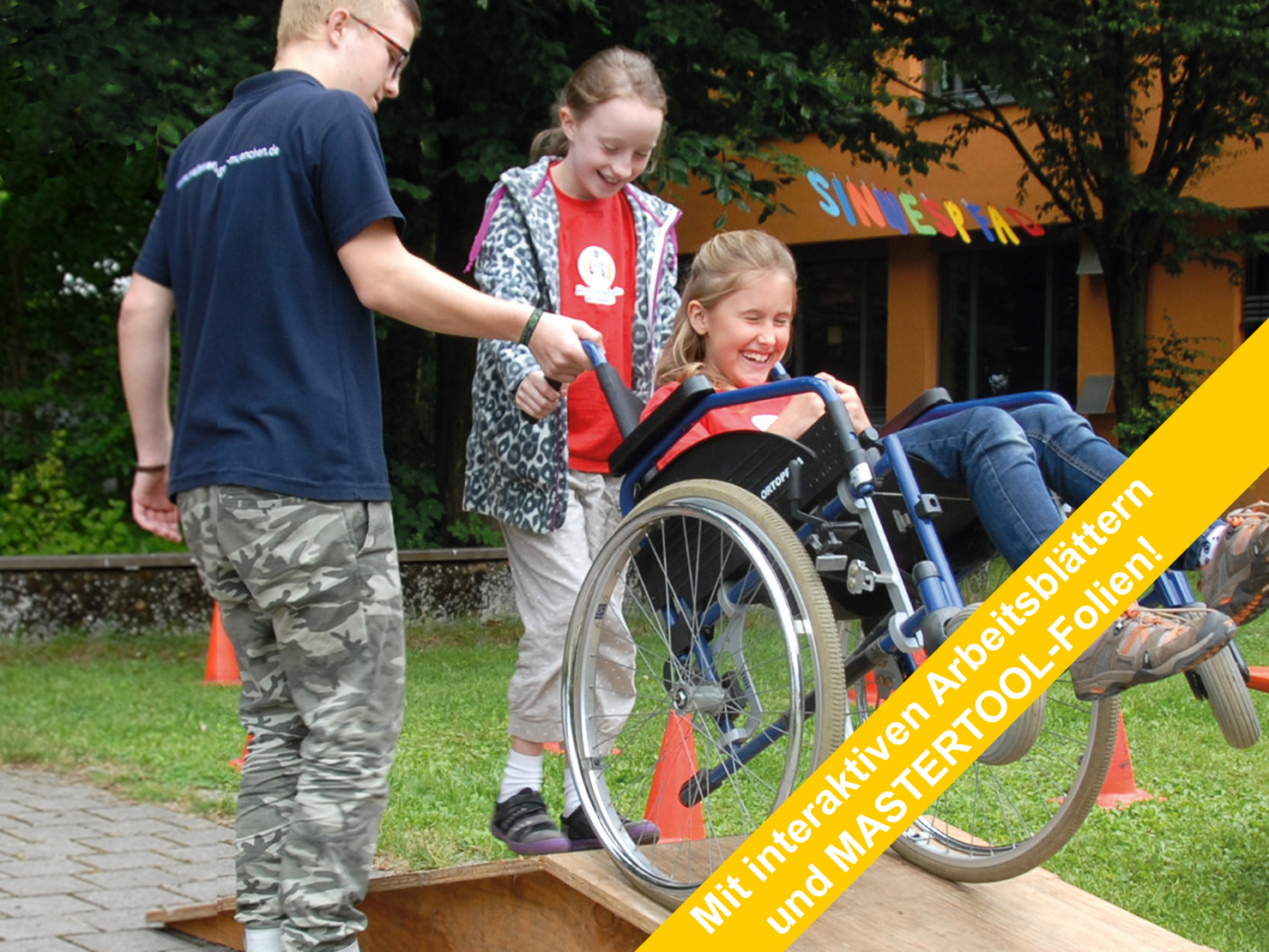
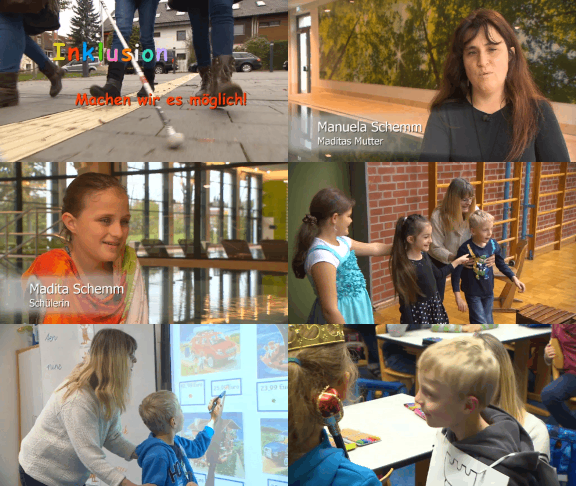
Madita is eleven and blind. She does not want to go to a special school but to a regular grammar school. She says she feels "normal" there. Jonathan is eight and has a walking disability. He likes going to the school where he lives. Here, his best friend sits next to him. Max Dimpflmeier, a teacher who is severely deaf, explains that school life is not easy. Quote Max Dimpflmeier: "You don't want to attract attention, you want to avoid saying that it is necessary for you that 70 people adjust to your situation." People on their way to inclusion.

Copyright
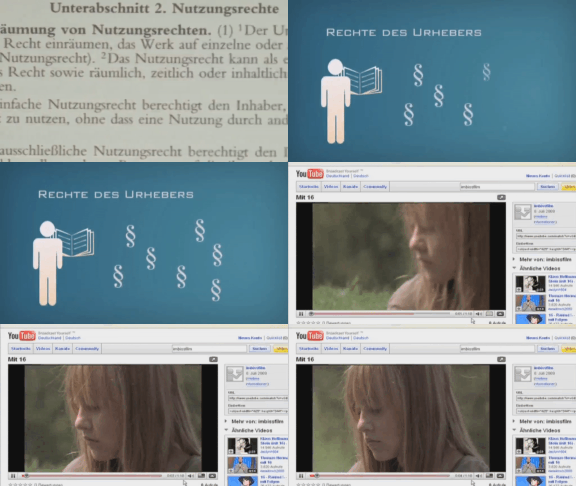
Copyright is subject to constant change to keep up with technological advances. This film enables the viewer to grasp the basic principles of this extremely intricate matter. By way of introduction, the film defines what an author is, what kinds of works there are and how long a work is protected on principle. Then the fundamental rights of an author are cited and it is shown how these are exploited in our times. In the third chapter, the respective rights are illustrated by way of practice-oriented examples of books, photos, music and films. Here, of course, an emphasis is laid on the field of education, taking into account the latest case law within the EU and Austria in particular. A further chapter highlights the problems arising with the Internet and goes into the citation law and pirate copies. All in all, in this way the viewer is made familiar with the most important basic terms and their meanings. Comprehensive worksheets and additional accompanying material invite us to deepen our knowledge of the subject.