






Suche:
- # Artistry
- # Biology
- # Chemistry
- # Ecological
- # Economy
- # English
- # Foreign Language
- # Geography
- # German
- # Health
- # History
- # Informatik
- # Latin
- # Mathematics
- # Media Education
- # Music
- # Physics
- # Politics / Civics
- # Preschool
- # Primary School
- # Religion
- # Society
- # Sports
- # Technology
- # Training of Teachers
- # Vocational Education
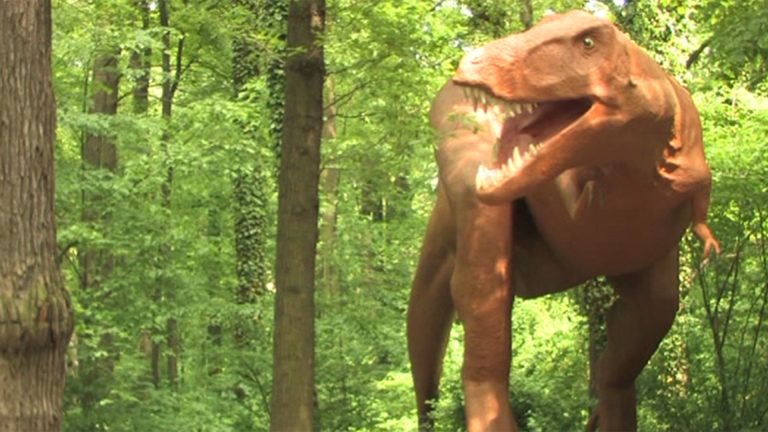
Dinosaurs
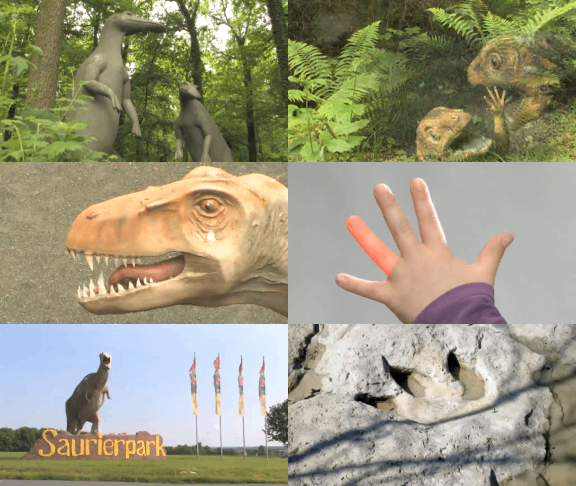
Dinosaurs lived on our Earth about 160 million years ago. There are several theories as to why they became extinct about 65 million years ago but the fascination with these creatures is still there. We can look at dinosaurs in dinosaur parks. People have reconstructed dinosaurs based on their ideas of what they might have looked like. In an age appropriate way the following questions are addressed in the film: When did dinosaurs live? What did the Earth look like at the time of the dinosaurs? How did dinosaurs live? Were dinosaurs clever? How do we know about dinosaurs? Where did the dinosaurs get their funny names from? Why did the dinosaurs become extinct? A special highlight is the chapter “Dinos Present Themselves“. A selection of dinosaurs, speaking in different voices, convey information on the various species to the children. Together with the extensive accompanying material the DVD is ideally suited for project work in the elementary sector.
Learn more
Media in Everyday Life
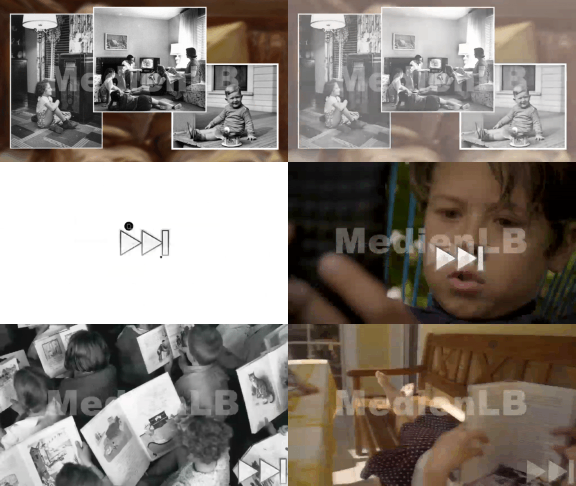
Media are part of our everyday lives. Children already used media in the past, however, it was not called that back then. A long time ago, boys and girls read books and magazines. In the past century, records, radio and television for children were added.
Learn more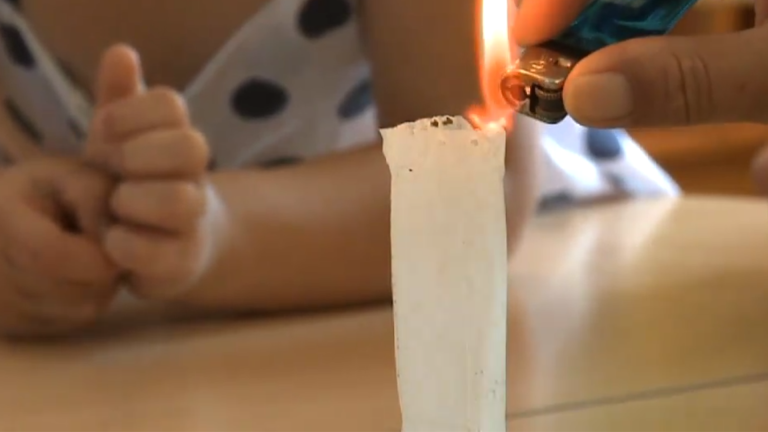
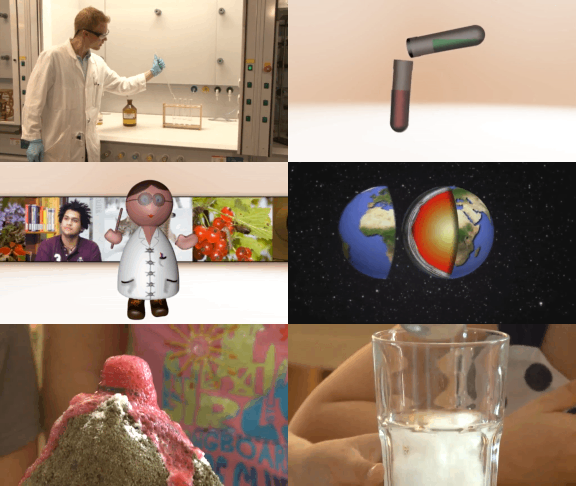
Research Made Easy
There are people who much enjoy finding out things that nobody has found an answer to yet. These people are called scientists. They work to ensure that we humans are able to understand our world better. They discover lots of things that nobody knew before. Or they discover something that occurred so long ago that there is nobody who can remember it any more.
Learn more

Clothing
Besides food and shelter, clothing is also one of the basic needs of human beings. Suitable clothing protects against wet, cold or warm conditions, and it also protects us from injuries or burns from the sun. Clothes are also useful because they help us to be able to pursue some jobs or tasks in a better way when wearing them. And finally, the clothes we wear are a sign we set for others. Thus, it is an expression of our personality. We sometimes let clothes speak for us, so to speak. Who we are, how we feel and what group we belong to. Which items does clothing comprise? Firstly, there is underwear: underpants and undershirt. On our feet, we wear socks or stockings. When it is cold, we might wear tights. Over our underwear, we wear a shirt or T-shirt on the upper part of our body. Our legs are covered by trousers. The trousers are supported by a belt or braces.
Learn moreMathematik – Grundrechenarten, Sachaufgaben, Größer/Kleiner/Gleich
In unserem Arbeitsheft Grundschule 1, Vol. 3 – Mathematik – Grundrechenarten, Sachaufgaben, Größer/Kleiner/Gleich finden Sie 50 interaktive und didaktisch aufbereitete Aufgaben.
Englisch – Lese-/Hörverstehen Stufe 1
In unserem Arbeitsheft Grundschule 3/4, Vol. 3, Englisch – Lese-/Hörverstehen Stufe 1 finden Sie 50 interaktive und didaktisch aufbereitete Aufgaben.
Learn moreArbeiten mit einem Mikroskop
In 10-15 interaktiven Modulen wird für Grundschulkinder Wissen zur Arbeit mit dem Mikroskop vermittelt und anschließend abgefragt.
Learn moreLustige Tierrätsel
In 10 interaktiven Modulen erkennen die Schülerinnen und Schüler auf humorvolle Weise Tiere der Heimat und des Zoos kennen.
Learn more
MedienLB has been producing award-winning school films and interactive modules for the classroom since 2006.