







 Geography

46502146 / 55501771
Climate Phenomena
Impact of El Nino on the Weather
Weather, atmospheric condition and climate must be clearly distinguished.
Weather describes the current state of the atmosphere surrounding us in a certain place.
That means that the weather may change by the day or even at hourly intervals, and that the weather on Earth differs considerably.
Our Earth is surrounded by a thick envelope of air which is composed of different layers. This envelope of air is called atmosphere.
The weather takes place in the lowest layer of the atmosphere, the troposphere. Due to the Earth’s gravity, it is the densest part of the atmosphere because it contains 80 per cent of the air and almost all gaseous water, which is the moisture bound in the air.
The driving force of all weather events and the constantly revolving masses of clouds and air in the troposphere is the sun.
Through light and heat radiation the sun provides energy and is like an engine powering our weather.
So the foundations of the weather are the warming sunrays, the water in its hydrological cycle and the air which surrounds us with its pressure balancing wind flows that mix and react with one another according to simple physical laws.
When these components are available in various amounts, elemental weather phenomena such as fog, clouds, rain, snow, wind, frost and sunshine are formed.
The weather often changes daily and sometimes even several times a day and is almost never the same everywhere.
So weather is the momentarily perceptible state of the lower atmosphere, the troposphere, in a specific place at a specific time.
In the course of a year, the large-scale weather pattern can also remain the same for some days or weeks. Typical characteristics of similar weather are called atmospheric condition.
- <> Languages : DE, EN
- <> Target Groups : Sek I, Sek II
- <> Subject : Geography
- <> Length : 20:04 min
- View in learning platform
Licenses
Curriculum-centred and oriented towards educational standards
Matching
Inclusion
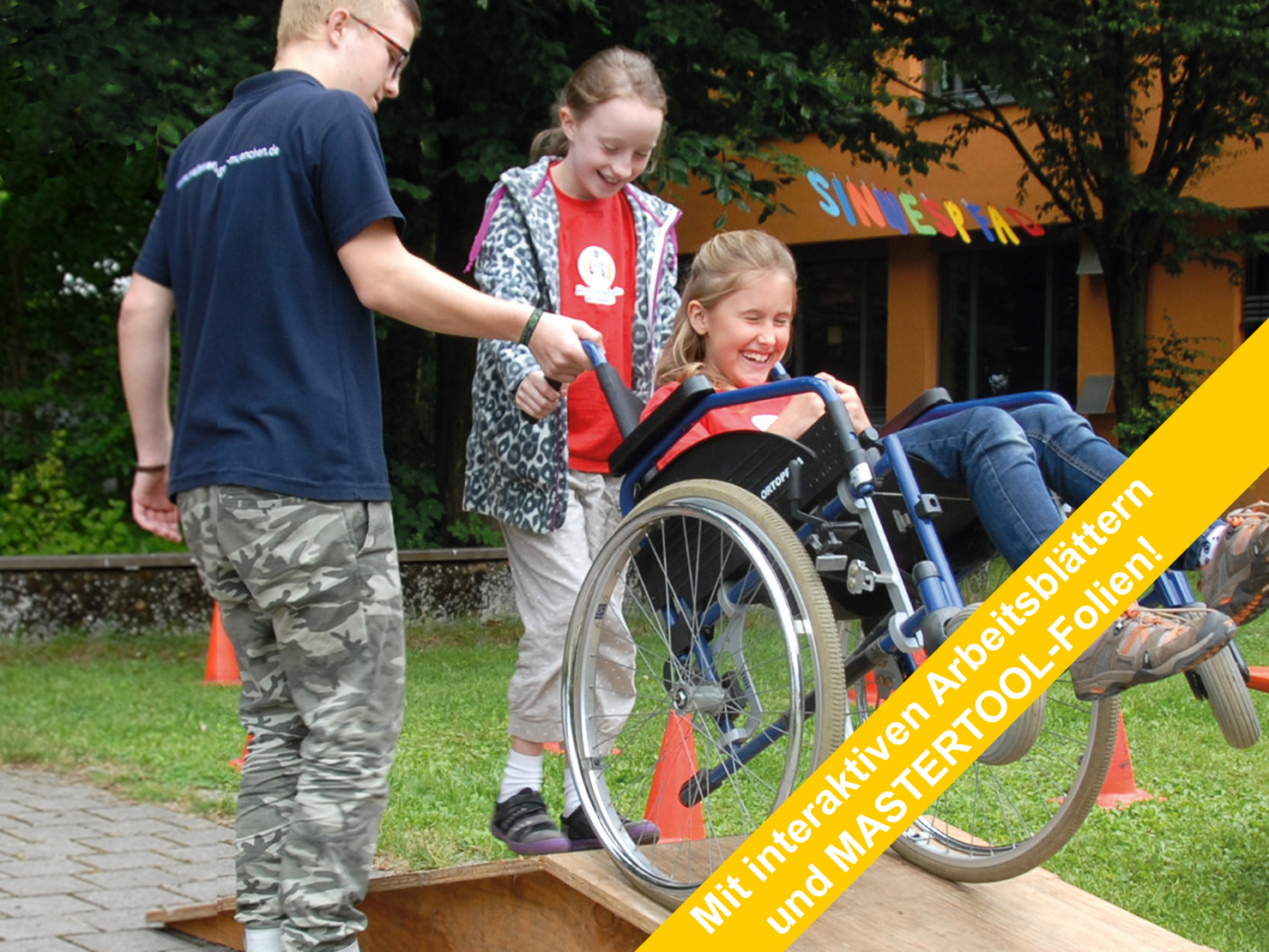
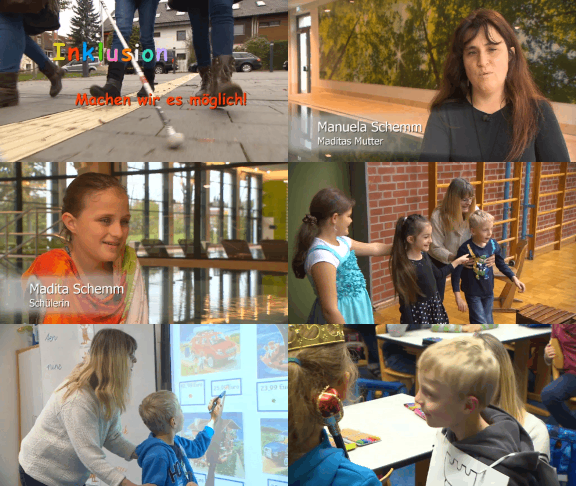
Madita is eleven and blind. She does not want to go to a special school but to a regular grammar school. She says she feels "normal" there. Jonathan is eight and has a walking disability. He likes going to the school where he lives. Here, his best friend sits next to him. Max Dimpflmeier, a teacher who is severely deaf, explains that school life is not easy. Quote Max Dimpflmeier: "You don't want to attract attention, you want to avoid saying that it is necessary for you that 70 people adjust to your situation." People on their way to inclusion.
Podcasting
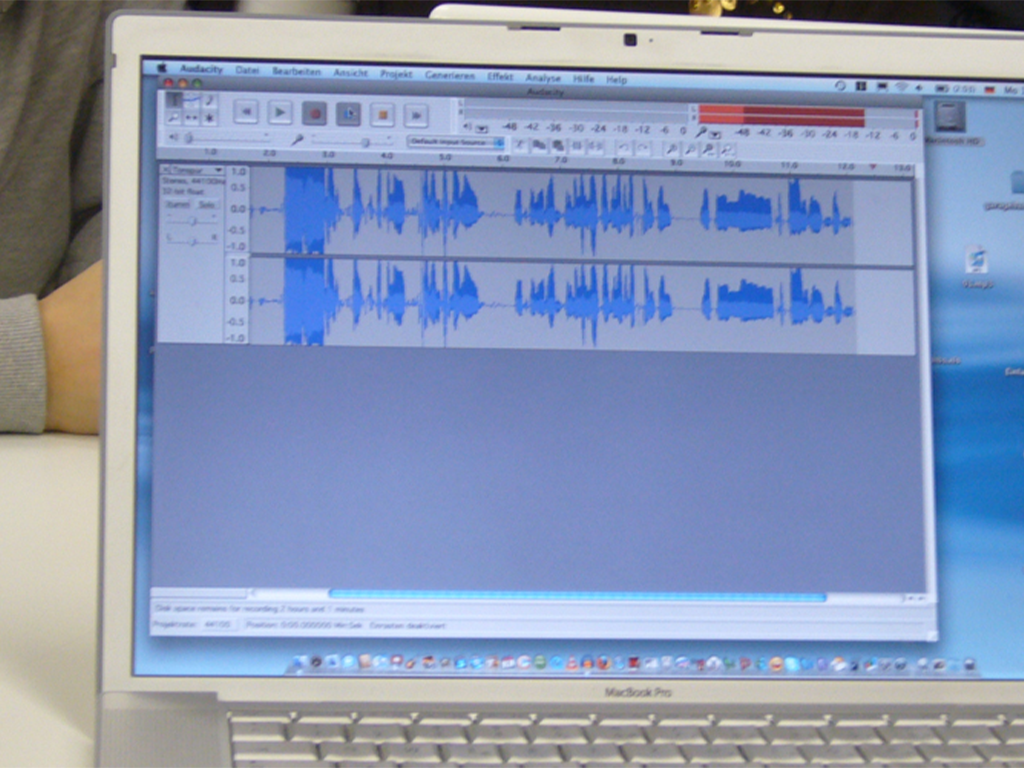
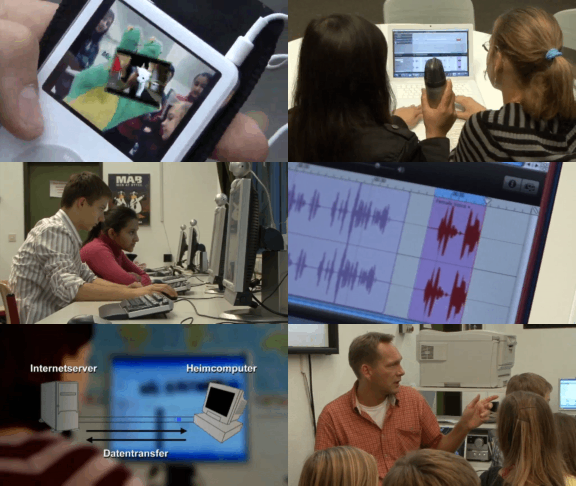
Today, the use of new media has become a matter of course not only in everyday life – schools and teaching, too, benefit from the new technologies and methods, which support active and independent learning. Especially in computer science, ethics and language courses but also in all other subjects, modern media are a valuable pedagogic and didactic asset. This DVD uses the example of podcasts to demonstrate how the possibilities opened up by new media can be applied in the classroom and how the pupils can be taught to handle them in a competent and target-oriented manner. The film is aimed at supporting the use of podcasts at school and encourages making them. This also requires the ability to find information on the Internet and assess it. The film informs on the functionality of podcasts and technical background as well as on the teaching and learning possibilities offered by podcasts – ranging from specific contents to superordinate learning targets such as the advancement of creativity and team spirit. The DVD is a useful support for teachers applying new media and wishing to show their pupils how to handle Running Time: 20:29 ms them in a sensible way.
Pupils Practise Inclusion
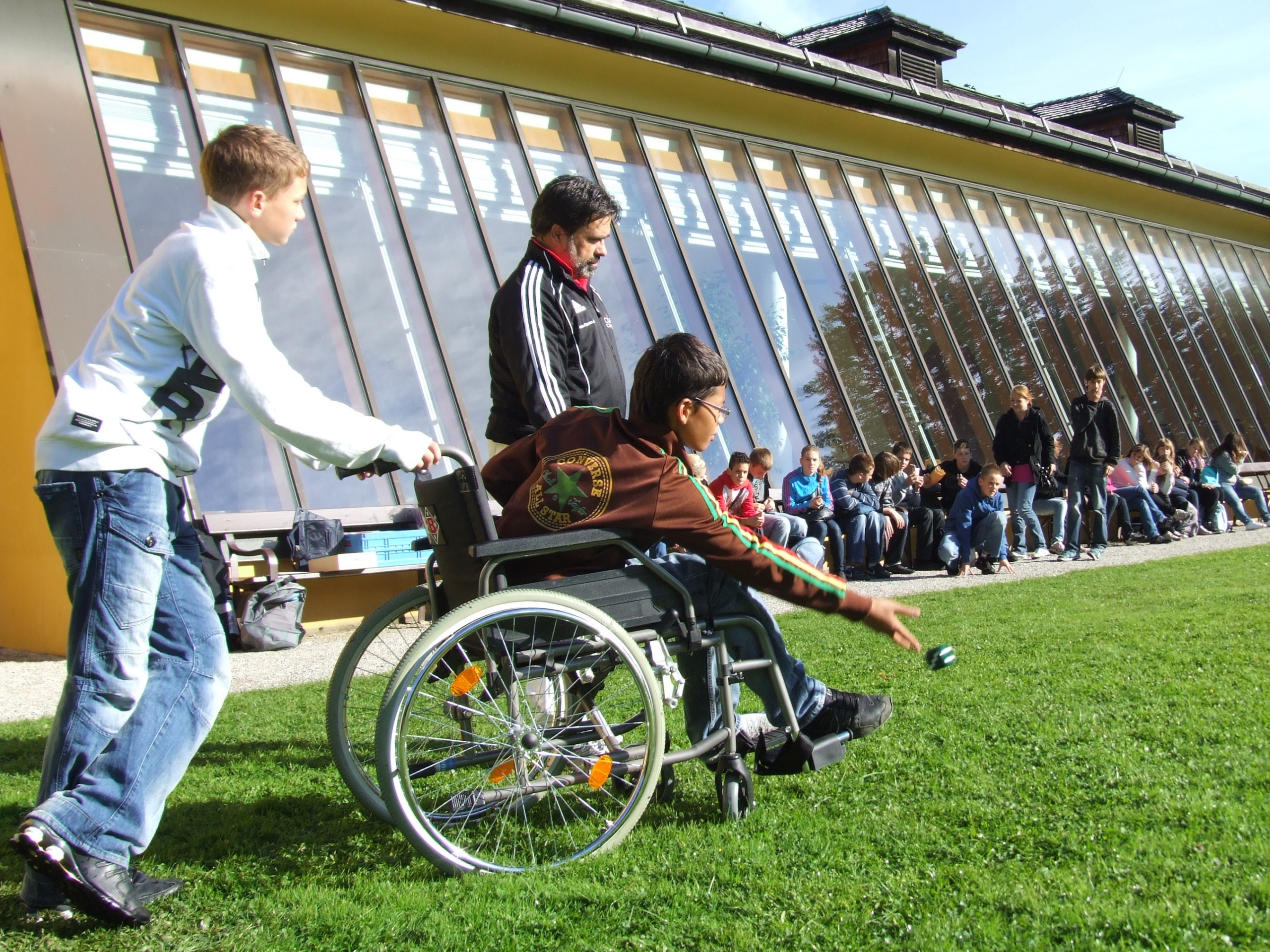
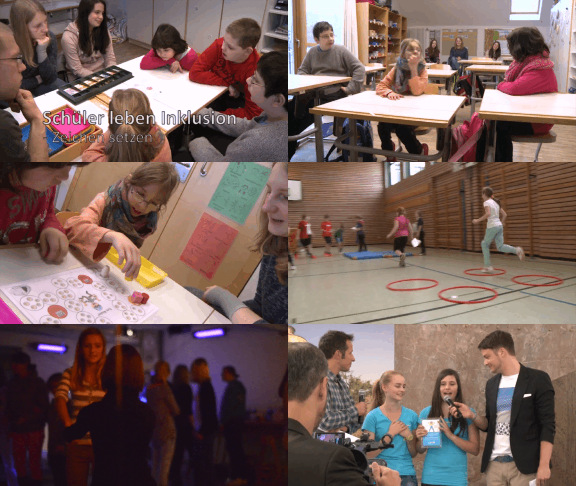
When people come together, no matter under what concomitant circumstances – ultimately, it is about how these people meet and how openly they interact with one another.