







 Physics

46503508 / 55502982
Gravity
Attraction of masses
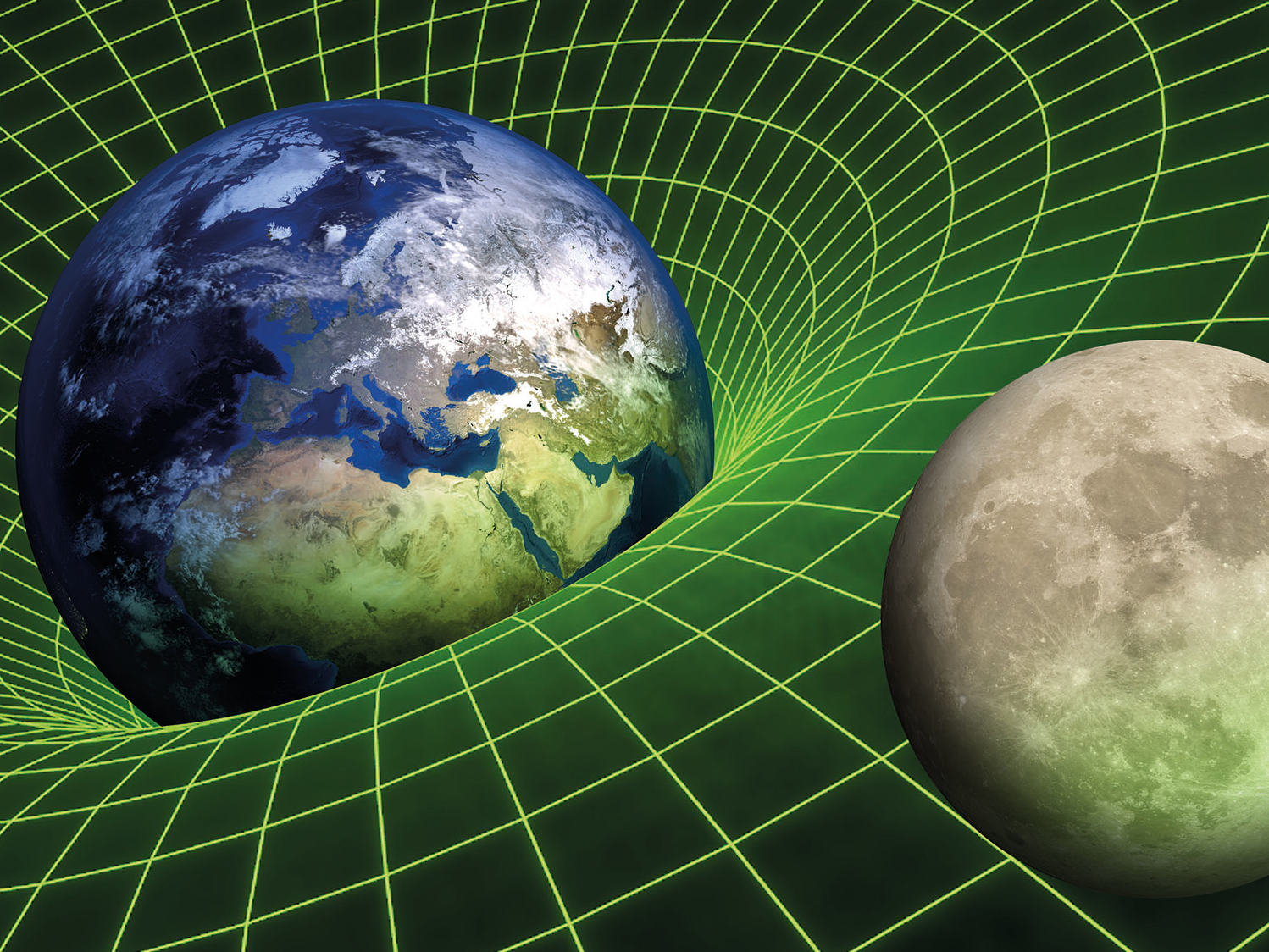
Gravity is the force that pulls something to the ground. It ensures that everything falls downwards. Like every force, it has a direction, namely towards the centre of the celestial body. The film vividly shows the development of the law of gravity from Isaac Newton through the further development by Albert Einstein, who described that gravity not only causes bodies to attract each other, but also causes space to curve around a body. Space and time are no longer absolute, fixed quantities, but changeable.
In this context, astrophysicist Harald Lesch explains very impressively how black holes are created and how the orbits of planets depend on gravity.
In combination with the extensive additional material (classic and interactive worksheets, glossary, test questions), the medium can be used excellently in lessons.
Glossary, interactive tasks and test questions were created with H5P and can be used without additional software.
In the detailed data section of the DVD 88 pages of teaching and accompanying material, of which:
23 pages of worksheets and supplements with solutions
17 test questions
10 Interactive tasks
- <> Languages : DE, EN
- <> Target Groups : Sek I
- <> Subject : Physics
- <> Length : 30:33 min
- View in learning platform
Licenses

Curriculum-centred and oriented towards educational standards
Matching

Computer Games
This film covers the topic of computer games in a variety of ways and from many different angles. Apart from the fascina- tion of computer games for users, the historical development as well as the production of computer games are described. The established genres are introduced, the guidelines of the German BPjM are explained. In light of recent public discussions, a neutral overview of the pros and cons of playing computer games is given, and different kinds of player behaviour are outlined. In this film, the pupils will recognise many aspects of their favourite pastime that encourage an independent, constructive use of this medium and reinforce their media competency. The film and teaching material are very closely related to the real-life situation.

Air Traffic
Being able to fly has been a dream of humanity from time immemorial. But it does not even date back a century that people actually started being able to travel through the air. Since the 1960s, the number of flight passengers has been constantly increasing. Thus, the airspace is no longer dominated by birds but by man-made flying objects.


Ceramic
Ceramics are indispensable in our everyday lives. We eat from ceramic plates, drink from ceramic cups, use tiled ceramic bathrooms. But how is ceramic manufactured? The film reveals the secrets of this fascinating material! We get to know more about the beginnings of ceramic in the Old World of Egypt and Mesopotamia, about Greece, China and Rome. We gain interesting insights into the valuable earthenware and are also shown the exquisite further development of the "white gold". Today this versatile material is irreplaceable in industry, too. Whether in space or as an easily compatible substitute in medicine, ceramic is applied in many places.