





Suche:
- # Artistry
- # Biology
- # Chemistry
- # Ecological
- # Economy
- # English
- # Foreign Language
- # Geography
- # German
- # Health
- # History
- # Informatik
- # Latin
- # Mathematics
- # Media Education
- # Music
- # Physics
- # Politics / Civics
- # Preschool
- # Primary School
- # Religion
- # Society
- # Sports
- # Technology
- # Training of Teachers
- # Vocational Education
Tea
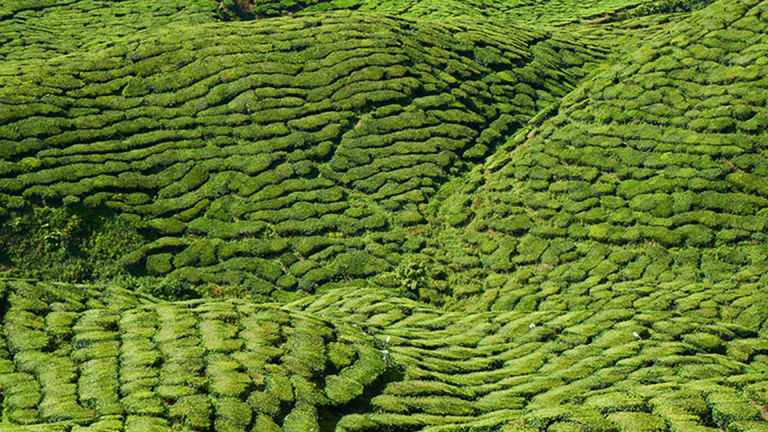
It is a popular hot drink all over the world. The Dutch brought it from China to Europe. It is the centre of ceremonies and traditions in various countries.
Learn more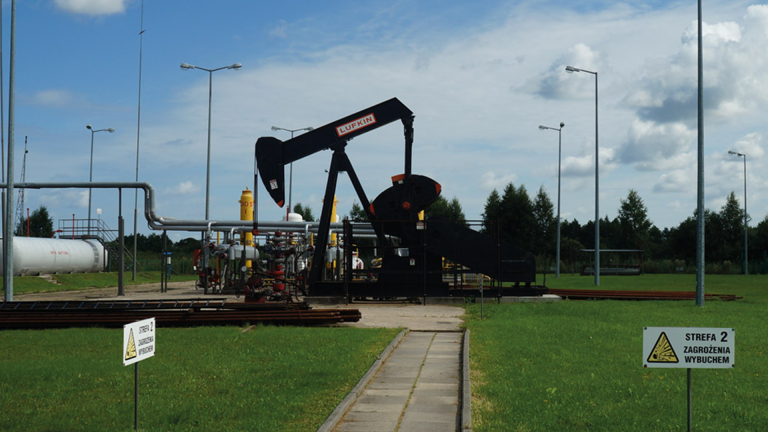
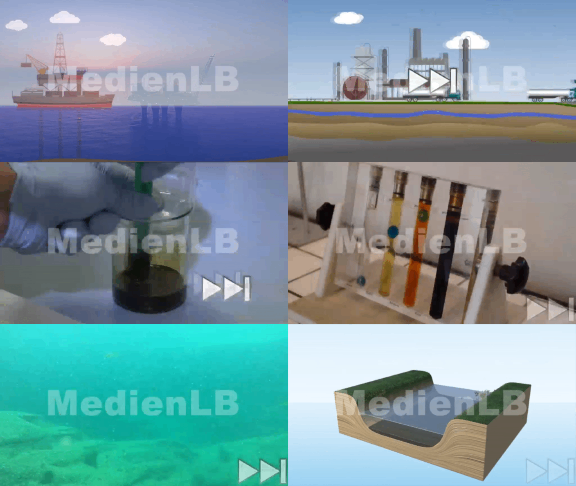
Petroleum
Petroleum – a resource without which our modern industrial society is hardly conceivable. It serves as a basis for the fuel of almost all means of transport, but also for generating heat and electricity.
Learn more
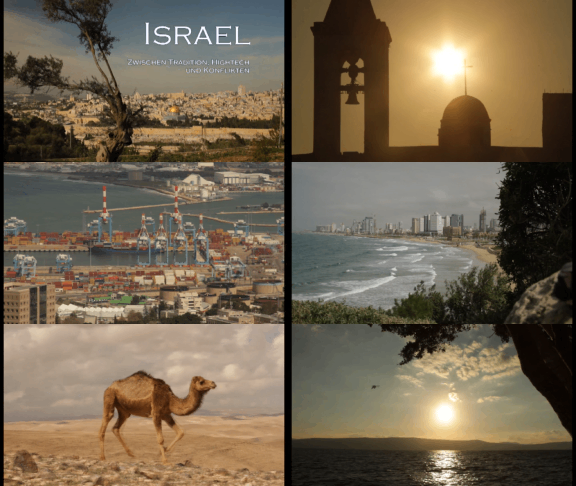
Israel
The territory of present-day Israel is one of the oldest cultural regions on Earth. It is the Holy Land of three world religions: Judaism, Christianity and Islam. But this country between the Jordan and the Mediterranean with a rich tradition is threatening to break apart because of the conflict between Israelis and Arabs.The territory of present-day Israel is one of the oldest cultural regions on Earth. It is the Holy Land of three world religions: Judaism, Christianity and Islam. But this country between the Jordan and the Mediterranean with a rich tradition is threatening to break apart because of the conflict between Israelis and Arabs.
Learn more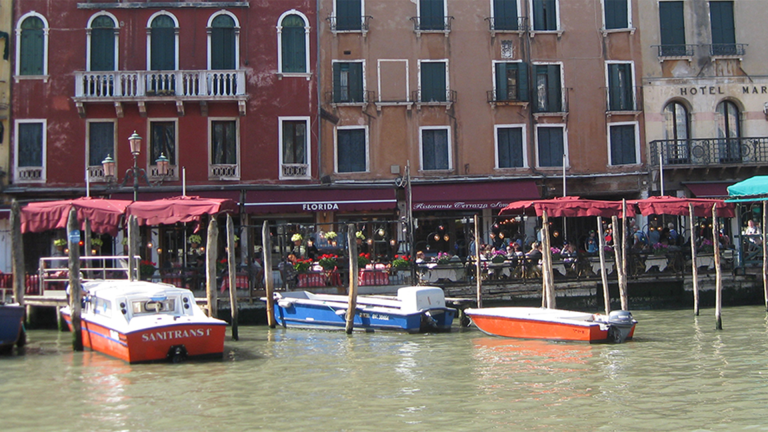
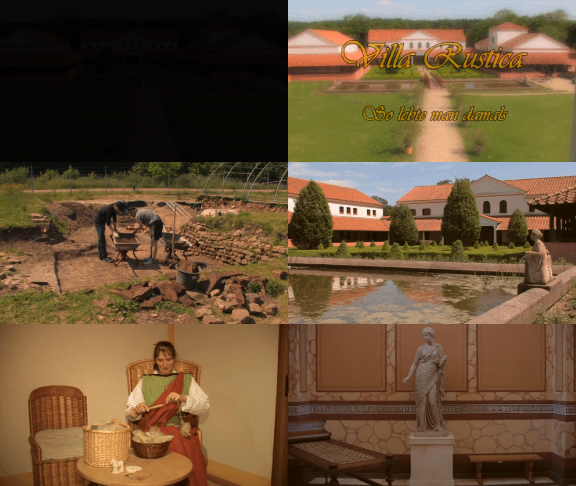
Venice
Showered with superlatives, Venice is doubtlessly an out- standing city, welcoming up to 15 million tourists annually. But despite the powerful magic it radiates, the city is confronted with seemingly overwhelming problems. Hence, detractors keep talking about a dying city. Is Venice then really the At- lantis of our time? The film published here first of all provides a survey of the most important geographic data of the lagoon city and looks into the question why more than one thousand years ago people settled in this inhospitable environment. The immense wealth of the former maritime republic can still be imagined when looking at the sumptuous architecture of many of its buildings. The DVD examines the various causes responsible for the rise of Venice to the dominating merchant power of the whole Mediterranean region during the Middle Ages. And why did the city lose its importance afterwards? As a special highlight of this DVD, we have included a film on Venice dating back to 1968. The two films are excellently suited for comparison, on the one hand with respect to the city‘s historic development, on the other hand in view of its respective treatment on film.
Learn more
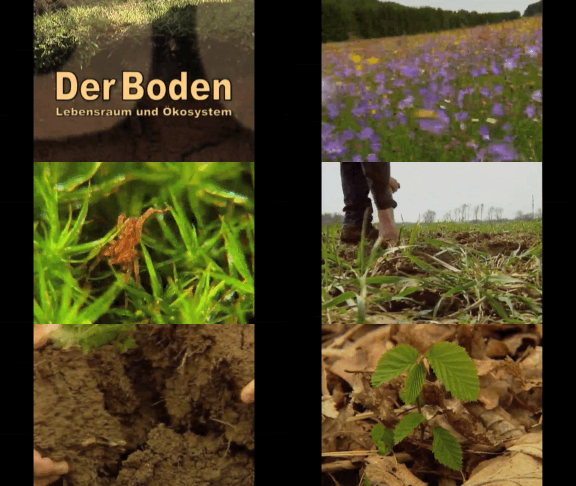
Soil
“To be brought back down to earth” is an expression we use when someone needs to come back to reality. Just like the air to breathe, the soil is taken for granted and simply there – we do not need to think about it. However, it is an extremely complex, sensitive structure and not only the crucial production factor for farmers but their basis of their existence. Ultimately, the soil is the vital basis of life for plants and, directly or indirectly, for animals as well as us humans. Starting from the relevance of the soil, the film clarifies the diverse, mutual relations with other elements of the landscape. In this cinematic exploration, the manifold, soil-forming factors and processes such as, for instance, decomposition and humus formation are explained just like the geographical basic terms “soil profile”, “horizons” and “soil type”. Over the past 150 years approximately, a profound change has taken place in agricultural production, which was essential to provide a stable, high-quality sustenance of the growing population in the industrial states. The DVD also shows that heedless human interference into the soil ecosystem has brought about irreparable consequences.
Learn more
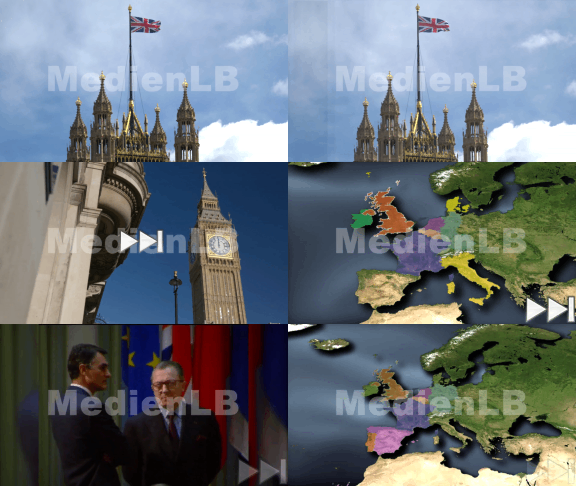
Brexit
On 24 June 2016, a narrow majority of eligible voters in the UK voted to leave the EU, the so-called Brexit.
Learn more
Europe
According to many scientists, the beginnings of Europe go back to antiquity, and there specifically to the freedom and democracy of the Greeks. Others consider the foundations laid as late as in the Middle Ages. But the settlement of the area we call Europe today began far earlier. The key periods of our European history are to explain how Europe became what it is today.
Learn more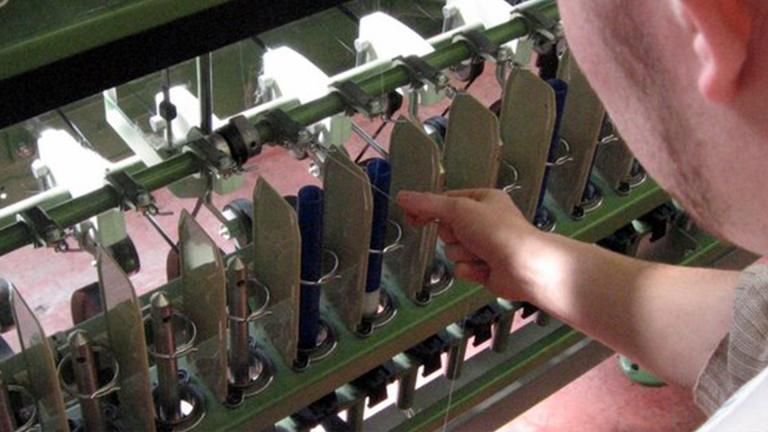
Textile Production Mechanic
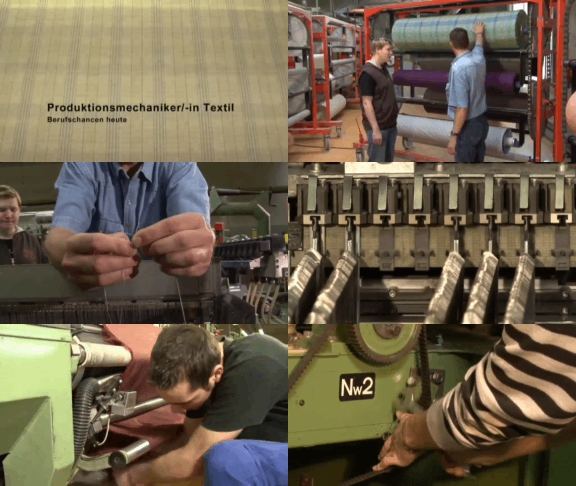
Setting, operating, monitoring, maintaining, servicing and repairing production machines – all these are tasks of a textile production mechanic. Only if the production equipment functions flawlessly and the work processes run smoothly and efficiently, textiles of all kinds and of the highest quality can be produced. Textile production mechanics undergo a broad vocational training. This enables them to work in all branches of the textile industry: in weaving mills, spinning mills, knitting mills, warp knitting mills or elsewhere in the textile industry. Qualifications required for this job are GCSEs or a university entrance qualification. Furthermore, soft skills such as a sense of responsibility, diligence, accuracy and reliability are expedient. The job of a textile production mechanic is a positive challenge for all those interested in engineering and manufacturing as well as in textile fabrics and patterns.
Learn more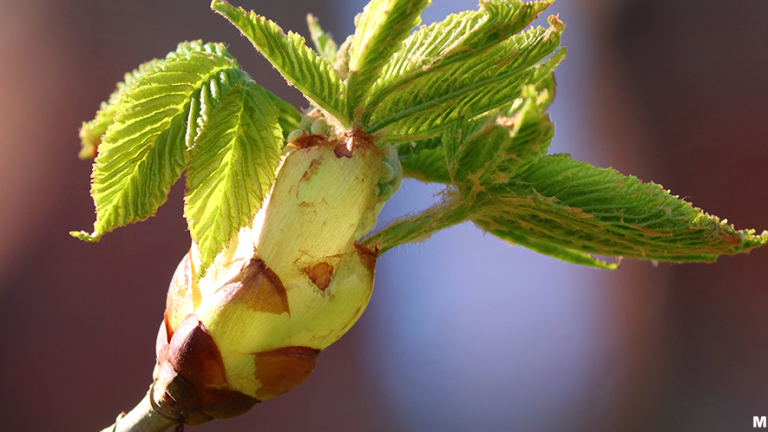
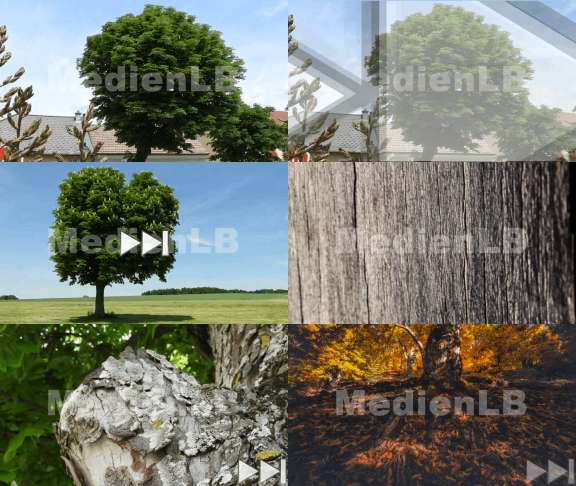
Kastanienbaum
Die Rosskastanie ist ein in Mitteleuropa heimischer Baum, die ursprünglich vom Balkan stammt.
Learn more
MedienLB has been producing award-winning school films and interactive modules for the classroom since 2006.
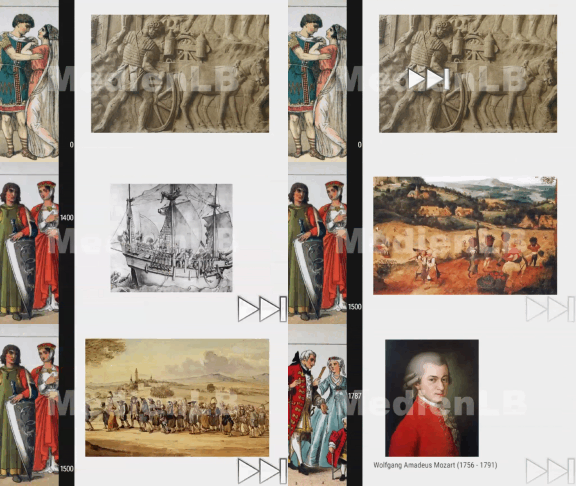
Unterwegs gestern und heute
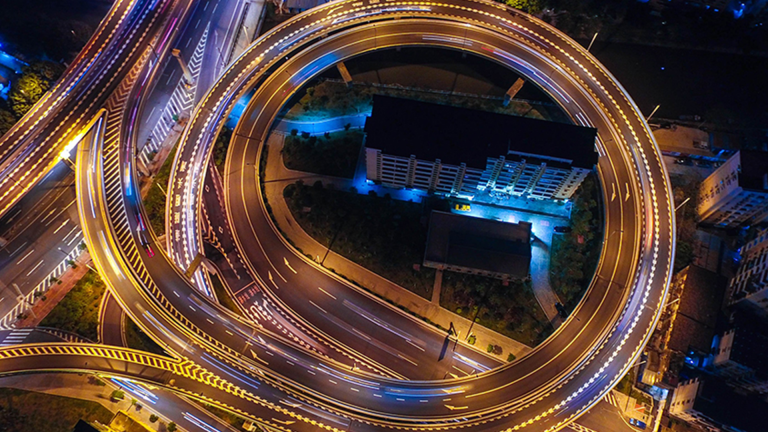
Eine Reise von Frankfurt nach Australien dauert heute 24 Stunden.
Learn more
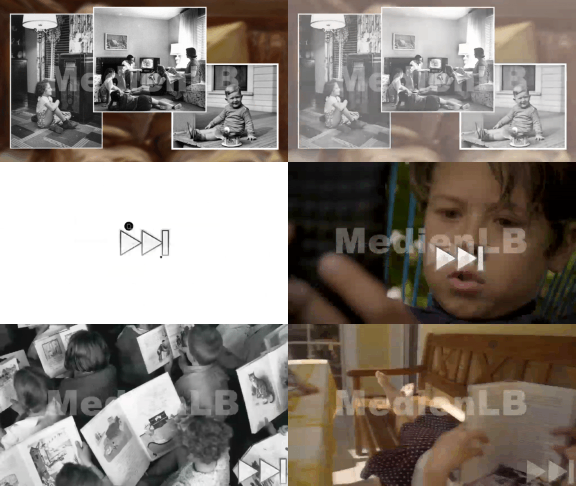
Media in Everyday Life
Media are part of our everyday lives. Children already used media in the past, however, it was not called that back then. A long time ago, boys and girls read books and magazines. In the past century, records, radio and television for children were added.
Learn more