







 Politics / Civics, Society


4675521 / 5563669
Werte und Normen in Deutschland
Animationsfilm
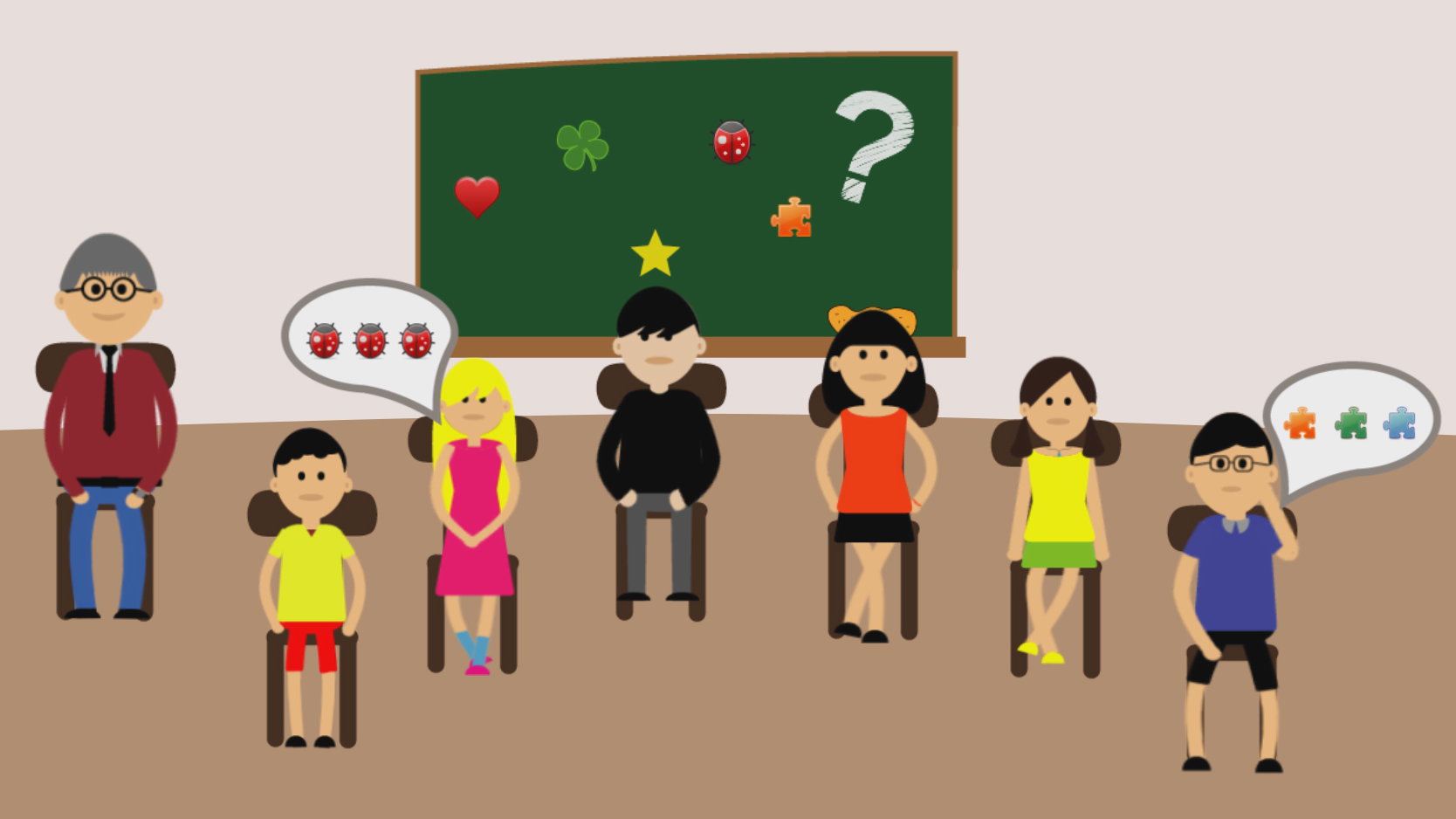
Dieser sprachlose Animationsfilm zeigt in leicht verständlichen Bildern in Alltagssituationen die Werte und Normen in Deutschland. Für Erwachsene und Kinder, welche neu in unsere für sie fremde Gesellschaft kommen und (noch) nicht unsere Sprache sprechen oder verstehen. Werte und Normen werden anschaulich auch ohne Sprachkenntnisse schnell vermittelt. Durch die Unterteilung des Filmes in sinnvolle Sequenzen (Gleichberechtigung, Meinungsfreiheit, Religionsfreiheit, Schulbildung, gewaltfreie Erziehung) können die einzelnen Themengebiete aufbereitet, diskutiert und vertieft werden. Als weitere Ergänzung kann der auf DVD und Online verfügbare Film „Werte und Normen in Deutschland – Mit und von Flüchtlingen“ in vier Sprachen“ (auch in Hocharabisch und Englisch) eingesetzt werden.
Gemeinsam mit dem sehr umfangreichen Unterrichtsmaterial (klassische und interaktive Arbeitsblätter und Testaufgaben) ist der Unterrichtsfilm sehr gut für den Einsatz im Unterricht geeignet.
Play trailer
- <> Languages: DE, EN, TR, AE
- <> Target Groups: FÖ, GS, Sek I, Sek II
- <> Subject: Politics / Civics, Society
- <> Length: 27:46 min
- View in learning platform
Licenses
Curriculum-centred and oriented towards educational standards
Matching


Racism
Do you perhaps know that?

Blogging
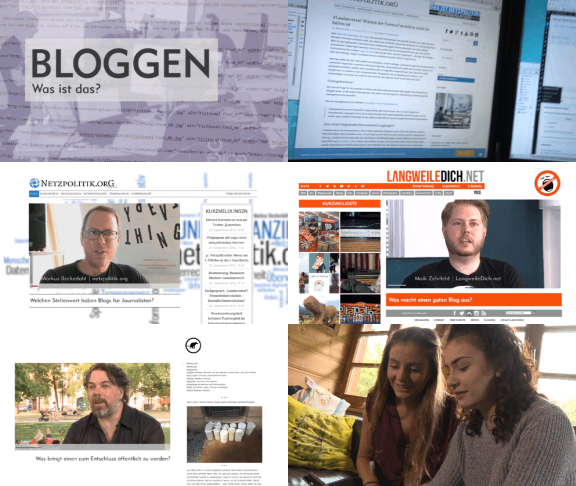
The weblog or blog, for short, as a medium is not much older than this century. Blogs came into being in the World Wide Web as ’messages from below’, as web pages from web creators who wanted to share their view of the world with the world. They are short notes, long texts, pictures, videos, which are posted loosely and at random intervals to the world for an undefined public.

Seal of approval
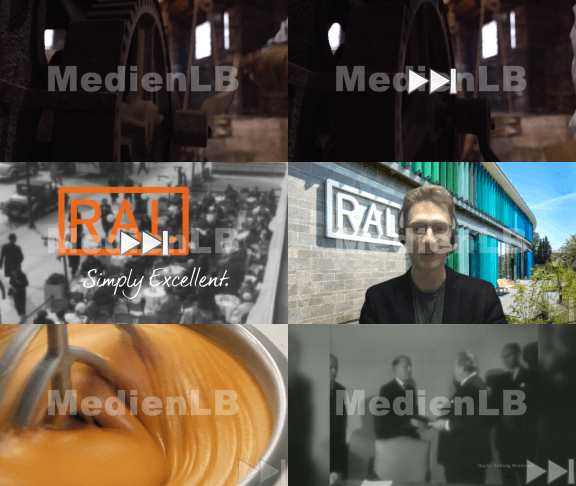
Quality seals such as the "Bio-Siegel", "Blauer Engel", "Stiftung Warentest" and up to 1,000 other seals represent characteristics such as sustainability, health or safety with regard to a product, a service or even a company.