







 History


46504304 / 55503359
Preußen II
Deutsches Reich, Erster Weltkrieg, Mythos
Dieser zweite Teil unserer Filmreihe über Preußen berichtet über die Politik des letzten preußischen Königs und späteren deutschen Kaisers Wilhelm I. Vom Aufstieg zum Deutschen Kaiserreich bis hin zu Preußens Untergang. Die Auflösung Preußens nach Ende des 2. Weltkrieges setzte einen Schlusspunkt unter eine Jahrhunderte alte wechselvolle Geschichte. Der Name Preußen ist untrennbar verbunden mit Aufklärung und Toleranz, verkörpert etwa in Friedrich dem Großen, verbunden aber auch mit Militarismus, Maßlosigkeit und Selbstüberschätzung Wilhelms II. Das Nachdenken über Preußen stand in den letzten Jahrzehnten im Schatten der hitzigen Debatten über die deutsche Geschichte.
In Verbindung mit dem ausführlichen Zusatzmaterial (Arbeitsblätter, interaktive Aufgaben, Glossar, Testfragen) lässt sich das Medium hervorragend im Unterricht verwenden. Die interaktiven Aufgaben wurden mit H5P erstellt und können ohne weitere
Software verwendet werden.
- <> Languages: DE
- <> Target Groups: Sek I
- <> Subject: History
- <> Length: 20:32 min
- View in learning platform
Licenses

Curriculum-centred and oriented towards educational standards
Matching

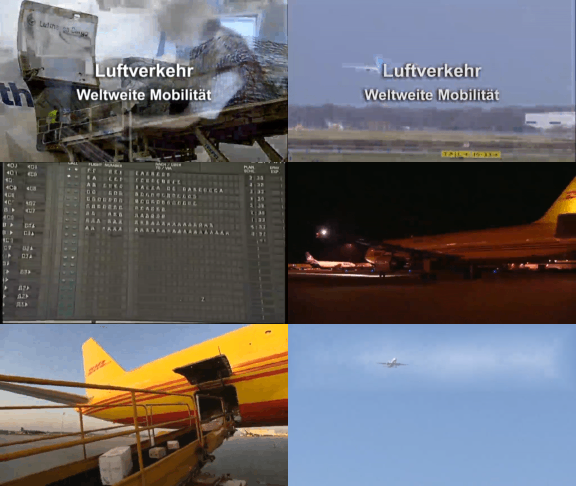
Air Traffic
Being able to fly has been a dream of humanity from time immemorial. But it does not even date back a century that people actually started being able to travel through the air. Since the 1960s, the number of flight passengers has been constantly increasing. Thus, the airspace is no longer dominated by birds but by man-made flying objects.

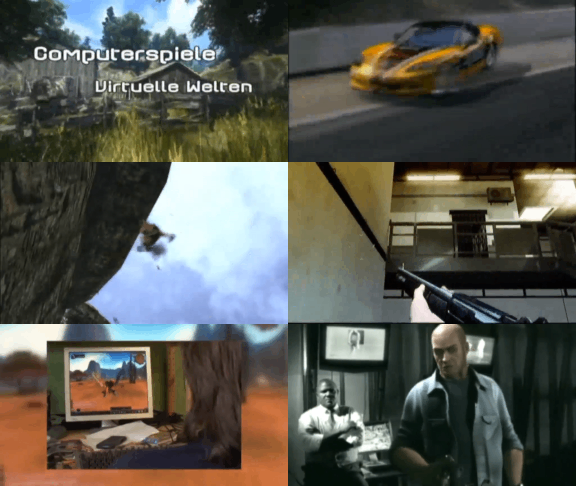
Computer Games
This film covers the topic of computer games in a variety of ways and from many different angles. Apart from the fascina- tion of computer games for users, the historical development as well as the production of computer games are described. The established genres are introduced, the guidelines of the German BPjM are explained. In light of recent public discussions, a neutral overview of the pros and cons of playing computer games is given, and different kinds of player behaviour are outlined. In this film, the pupils will recognise many aspects of their favourite pastime that encourage an independent, constructive use of this medium and reinforce their media competency. The film and teaching material are very closely related to the real-life situation.

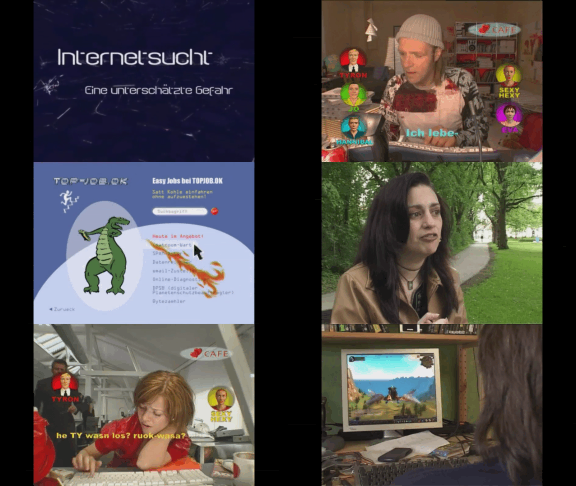
Internet Addiction
The film consists of two parts. The first part is the 15-minute short film “In the Net”. It describes the problem of excessive Internet use in a humorous way, in particular the risk of losing touch with reality when chatting. The second part illustrates with three real persons how Internet addiction can develop and the problems encountered by those who are afflicted. The authentic statements are commented by an experienced therapist. For many pupils, the issues addressed here are related to their everyday lives. What is a “sensible” use of the Internet, where does pathological addiction start? In contrast to addiction to alcohol, nicotine or drugs, the public seems to be largely ignorant of the problem of this addiction, which is not related to any substance abuse. The film provides material for discussion in the classroom (crossdisciplinary) and can be used as a basis for the formulation of prevention strategies.