







 Geography, Primary School

4675537 / 5563685
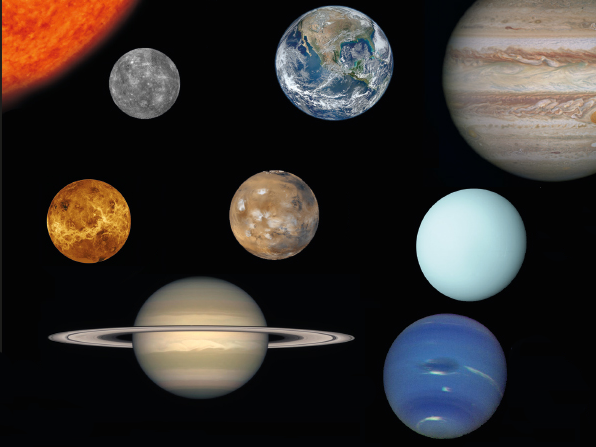
Our Solar System
Planets
Looking up at the cloudless night sky is something special. It is a spectacle that we are offered free of charge every clear night.
Whether it is the Moon, or the bright planets, or the even more distant stars, or the Milky Way, which crosses the sky like a ribbon – all of them have always interested and fascinated people.
In former times, people believed that everything that we see on the sky revolves around the Earth, that we actually live in the centre of the universe. Today we know that our Earth is only one of several planets that revolve around the Sun, and that even the solar system with all its planets is located at the very edge of our galaxy – the large stellar system called Milky Way. And even this giant galaxy is only one among many other galaxies in the universe.
So we fly through space on our globe Earth like on a grain of dust – but actually, how have we got there in the first place?
- <> Languages : DE, EN, TR
- <> Target Groups : GRU, Sek I
- <> Subject : Geography, Primary School
- <> Length : 24:07 min
- View in learning platform
Licenses
Curriculum-centred and oriented towards educational standards
Matching
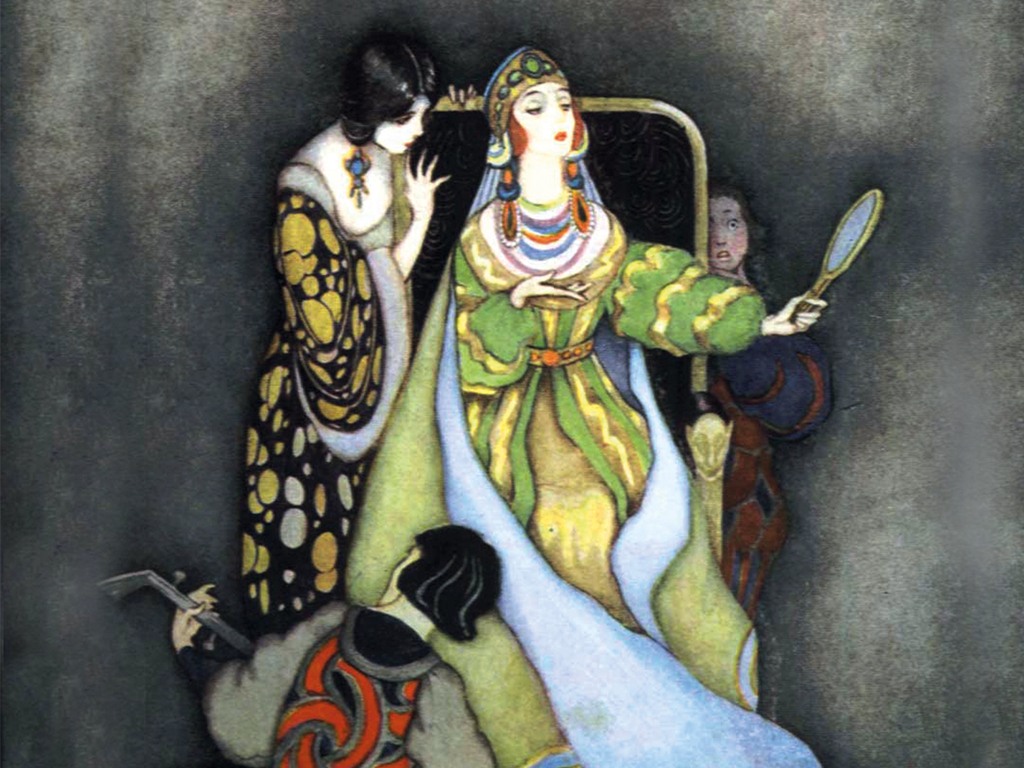
Ideals of Beauty
1. What Is Beautiful?
Peer Mediation
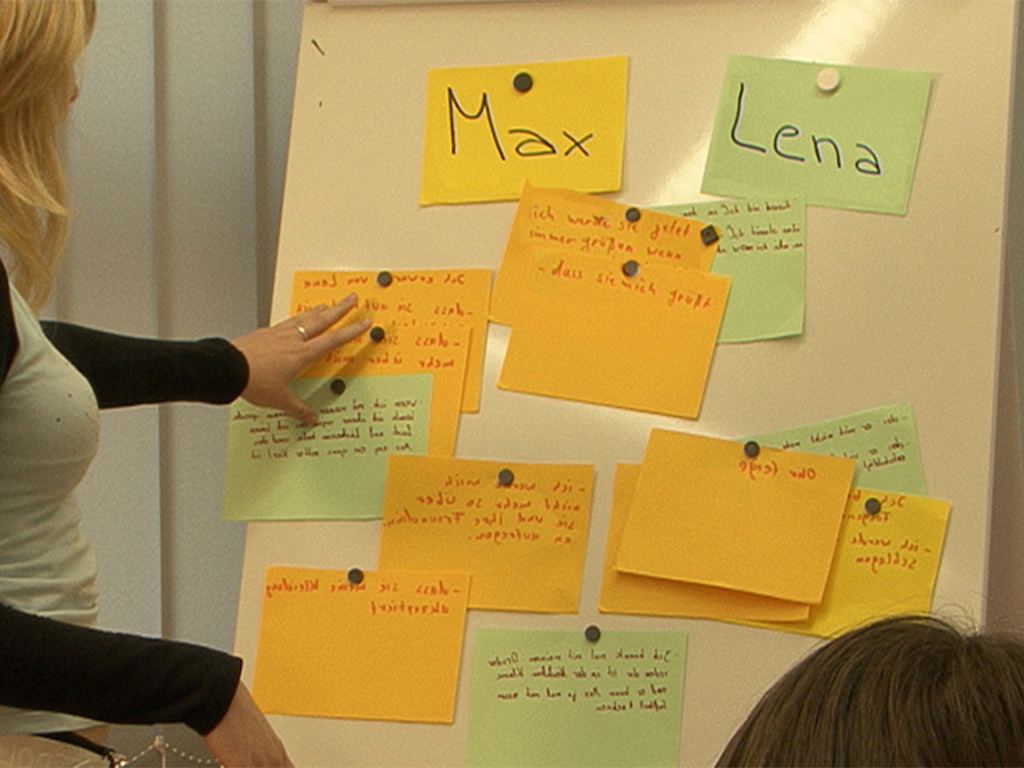
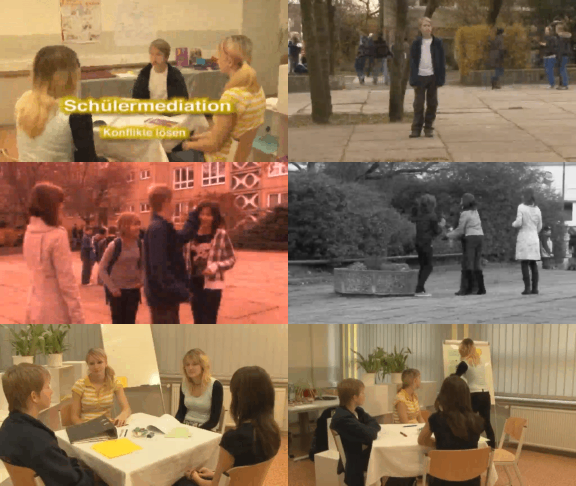
Lena and Max attend the 7th form. Max is new in class. During a break, Max notices that Lena and her friend are laughing at him again. Max loses his temper! He slaps Lena in the face. That hurts and Lena runs back into the classroom with a red cheek. The growing conflict between the two has escalated. Just like Lena and Max, every day pupils all over Germany have rows with each other. At the Heinrich Hertz Gymnasium in Thuringia, pupils have been trained as mediators for years. At set hours, they are in a room made available by the school specifically for mediation purposes. The film describes the growing conflict between Max and Lena and shows a mediation using their example. In doing so, the terms “conflict” and “peer mediation” are explained in a non-technical way. The aims of peer mediation and its progress in five steps as well as the mediators’ tasks are illustrated. The art of asking questions and “mirroring”, which the mediators must know, is described and explained. Together with the comprehensive accompanying material, the DVD is a suitable medium to introduce peer mediation at your school, too.
Part Time Kings
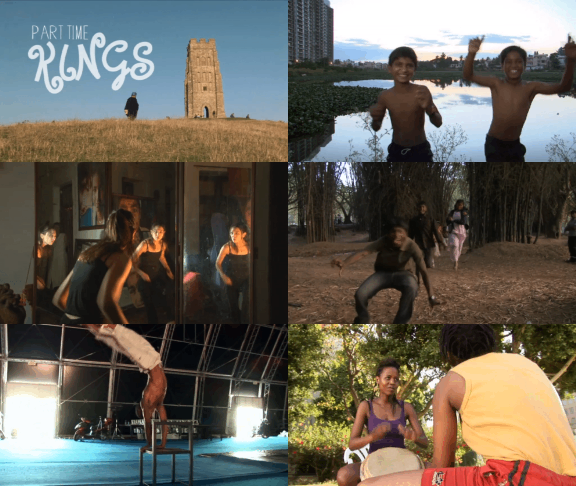
Your children are not your children