






Suche:
- # Artistry
- # Biology
- # Chemistry
- # Ecological
- # Economy
- # English
- # Foreign Language
- # Geography
- # German
- # Health
- # History
- # Informatik
- # Latin
- # Mathematics
- # Media Education
- # Music
- # Physics
- # Politics / Civics
- # Preschool
- # Primary School
- # Religion
- # Society
- # Sports
- # Technology
- # Training of Teachers
- # Vocational Education
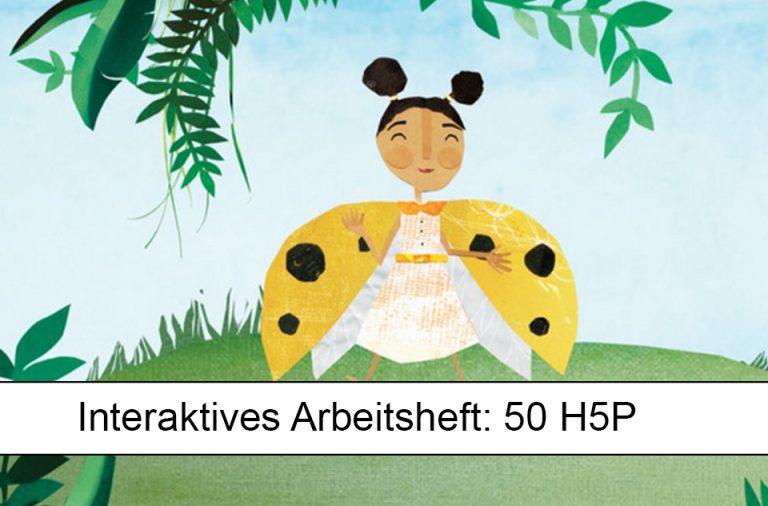
Bildergeschichten (Level 1) Vol. 2 Arabisch/Deutsch 5/6 – Deutsch/DaF-DaZ
In unserem Arbeitsheft Bildergeschichten (Level 1) Vol. 2 – Arabisch/Deutsch 5/6 – Deutsch/DaF-DaZ finden Sie interaktive und didaktisch aufbereitete Aufgaben.
Learn more
Kamishibai Vol. 4
The medium offers H5P tasks that can be used without additional software. The medium contains texts and interactive tasks on the subject of picture stories.
Learn more
Picture Stories (Level 1) Vol.3
In our workbook Mathematics, 6th grade, Vol. 1 you will find 50 interactive and didactically prepared tasks.
Learn more

Bewerbung
Bereits in den letzten Schuljahren werden die Schülerinnen und Schüler mit den Anforderungen des Berufslebens vertraut gemacht.
Learn more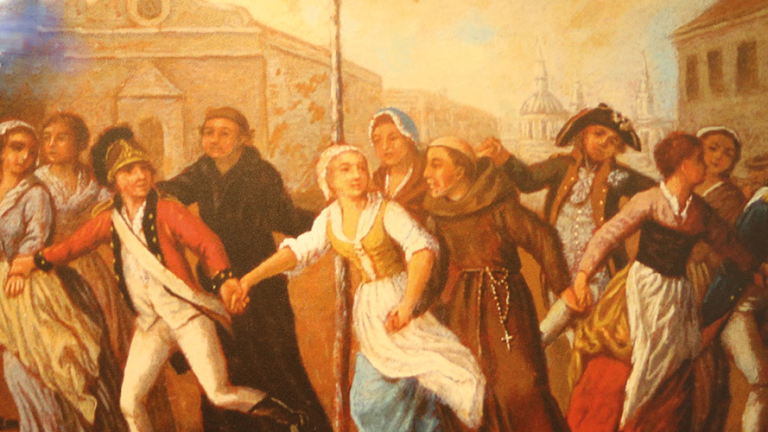
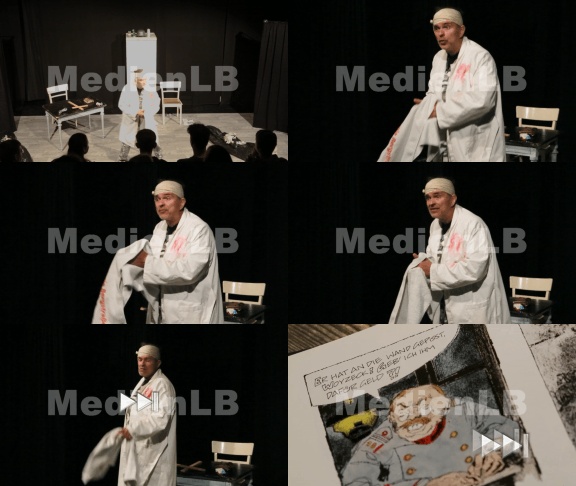
Büchners Woyzeck
Georg Büchner (1813-1837) starb, noch bevor er sein soziales Drama „Woyzeck“ vollenden konnte. Aus Fragmenten zusammengesetzt, wird das Werk bis heute neu inszeniert. Büchner war nicht nur Revolutionär und Schriftsteller, sondern auch Mediziner. Und so verbindet er in der Geschichte des „Woyzeck“ die politische und soziale Situation seiner Zeit.
Learn more
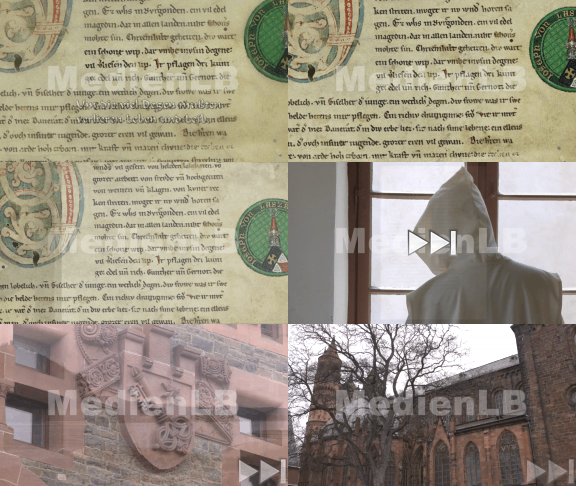
Lied der Nibelungen
Die Nibelungensaga ist eines der wirkungsmächtigsten Werke der deutschen Literatur. Das Epos um den Schatz der Nibelungen, Macht, Liebe, Tod und Rache entstand im 12. Jahrhundert. Der unbekannte Verfasser erzählt in mittelhochdeutscher Sprache und in 39 Aventiuren die Geschichte von Siegfried, Kriemhild, Gunther, Brünhild und Hagen und dem Untergang der Burgunden. Auch gibt der Film eindrücklich Hinweis auf die Entstehung der Texte und wie diese in der damaligen Zeit niedergeschrieben wurden. Er verweist auf die Existenz der unterschiedlichen Abschriften der Saga und wo sie heute zu finden sind. Auch nimmt er die Schüler:innen mit auf die Reise entlang der Schauplätze an der Donau.
Learn more
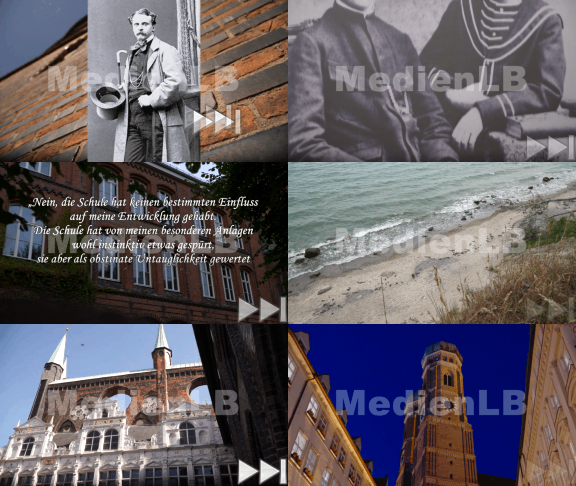
Thomas Mann
Thomas Mann ist einer der wichtigsten deutschen Schriftsteller des 20. Jahrhunderts. Der Film zeichnet die Lebensstationen des Literaturnobelpreisträgers nach und schafft Verbindungen zwischen seinem Leben und seinen wichtigsten Werken. Der Wandel vom unpolitischen Nationalisten zu einem überzeugten Demokraten und Gegner der Nationalsozialisten wird in zahlreichen Werkzitaten und Spielszenen überzeugend dargestellt.
Learn more
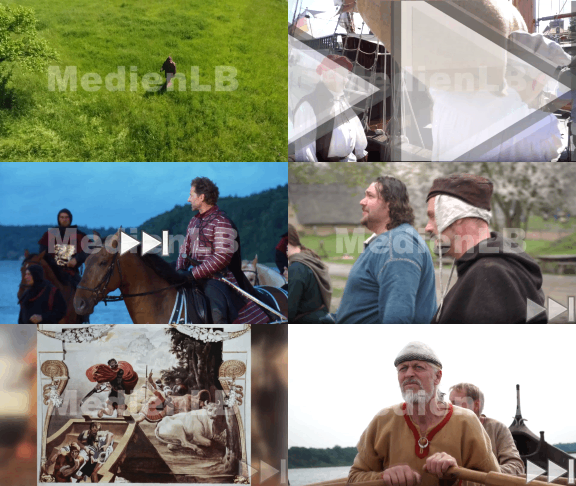
Unterwegs
Unterwegs sein, auf Reisen sein ist eine Urerfahrung des Menschen. Ob auf einem Feldzug, einer Bildungsreise oder einer Erholungsreise – die Urerfahrung des Reisens findet ihren Niederschlag in der Literatur.
Learn more
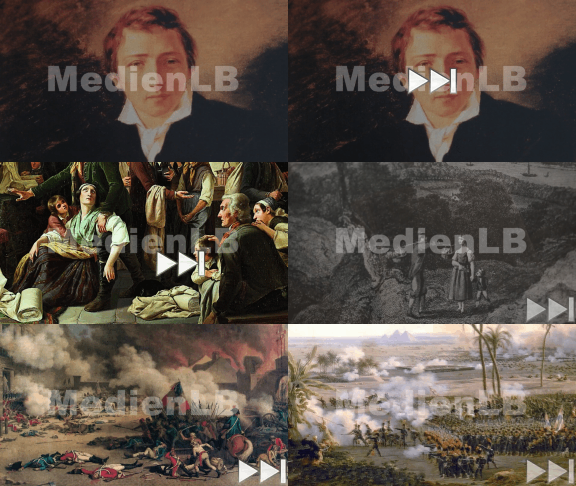
Pre-March Era
After Napoleon's final defeat at Waterloo in 1815, Europe was reorganised at the Congress of Vienna.The civil rights achieved in the French Revolution, which spread throughout Europe, were taken back. The growing resistance to this culminated in the March Revolutions of 1848 in various European countries. The film traces the epoch of Vormärz in Germany and shows in particular how the political present of the time was reflected in literature.
Learn more
MedienLB has been producing award-winning school films and interactive modules for the classroom since 2006.
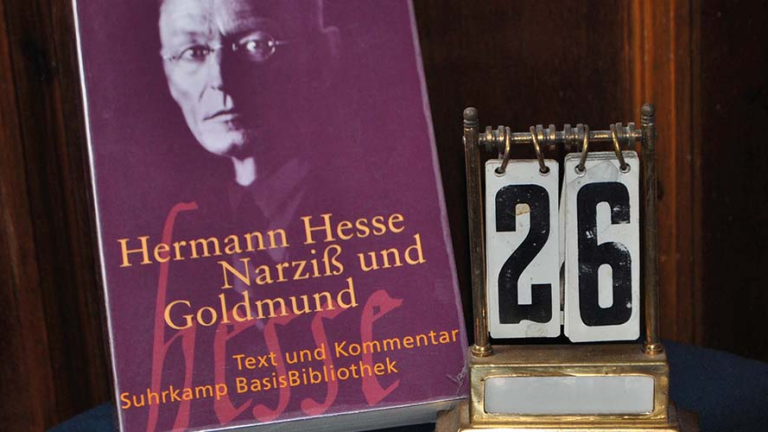
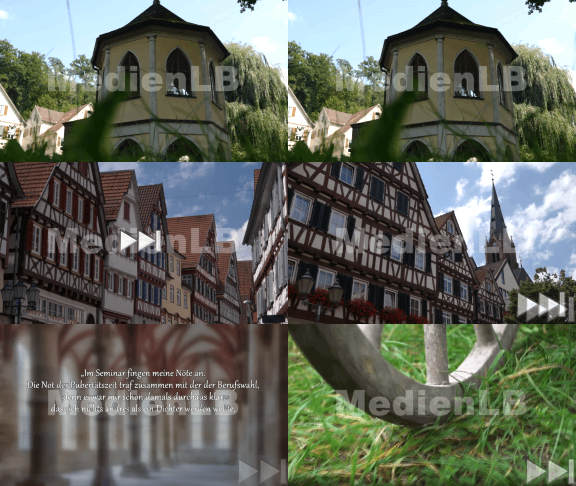
Hermann Hesse
Hermann Hesse, (1877 -1962) war ein deutsch-schweizerischer Schriftsteller, Dichter und Maler. Er war Zeit seines Lebens ein Suchender. Nicht nur sein großes dichterisches Werk, das ihm 1946 den Nobelpreis einbrachte, auch sein Lebenslauf legt Zeugnis davon ab.
Learn more
Schiller’s The Robbers
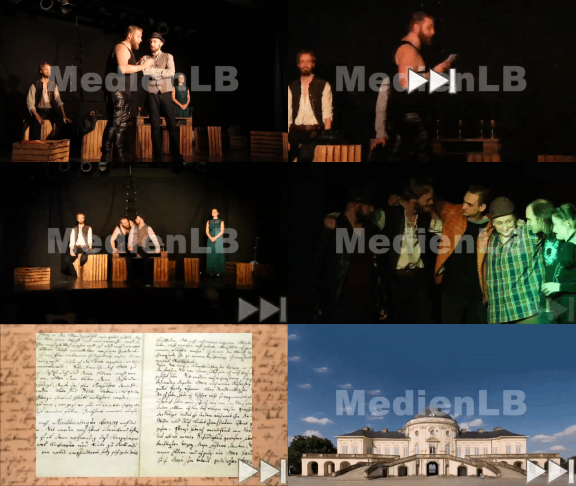
“The Robbers“ by Friedrich Schiller begins with a wicked intrigue. It revolves around two brothers; Karl Moor and Franz Moor, sons of the reigning Count von Moor, who hate each other. The rivalry between the two brothers is great. On the one hand, there is Karl, the intelligent, freedom-loving robber, and on the other, Franz, suffering from withdrawal of love, scheming and coldly calculating.
Learn more
Ballade
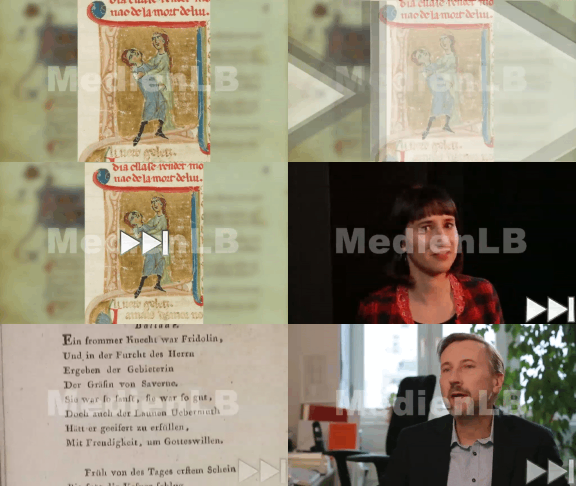
Johann Wolfgang von Goethe sah in der Ballade das „Ur-Ei der Dichtung“. Sie vereint Merkmale der drei Gattungen Lyrik, Epik und Dramatik in sich. Die ersten Balladen wurden im Mittelalter verfasst.
Learn more