




Suche:
- # Artistry
- # Biology
- # Chemistry
- # Ecological
- # Economy
- # English
- # Foreign Language
- # Geography
- # German
- # Health
- # History
- # Informatik
- # Latin
- # Mathematics
- # Media Education
- # Music
- # Physics
- # Politics / Civics
- # Preschool
- # Primary School
- # Religion
- # Society
- # Sports
- # Technology
- # Training of Teachers
- # Vocational Education


Neanderthal Man
For 250,000 years the Neanderthal dominated Europe during the last glacial period until he died out about 30,000 years ago.
Learn more

Alexander von Humboldt
The name of Alexander von Humboldt, who is considered the last polymath and is still admired as second discoverer in Latin America, is omnipresent. Schools, ships, mountains, rivers, squares are named after him; but above all animals and plants were given his name. But what about his natural history legacy and heritage in our time?
Learn more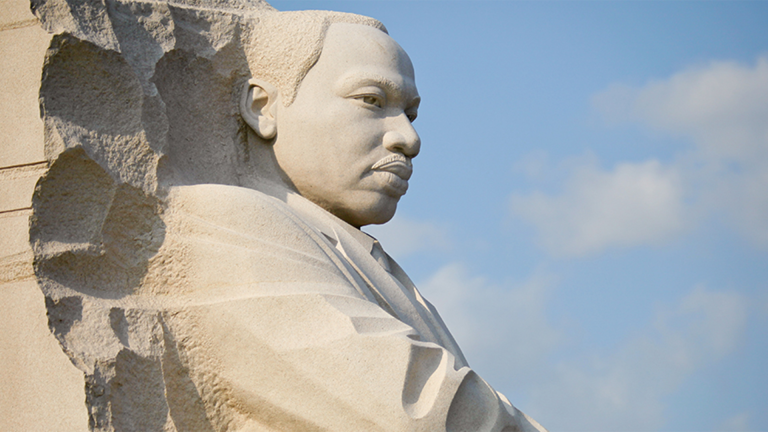

Martin Luther King
Martin Luther King, born and raised in the household of a pastor, was one of the privileged blacks. He saw and experienced the injustice of social oppression and racism, which were particularly pronounced in the Southern States of the USA, and some of which are still lingering today. He called for demonstrations and civil disobedience and became the spokesman for the Civil Rights Movement of the USA: ”But we refuse to believe that the bank of justice is bankrupt.“ In his famous speech Martin Luther King referred to the “inalienable rights of life, liberty and the pursuit of happiness” established in the American Declaration of Independence: ”I have a dream – I have a dream deeply rooted in the American Dream“, King announced his utopia of a just America amid tremendous applause from the crowd. In spite of the violent repressions of the demonstrations he remained an ardent proponent of nonviolent resistance, deeply impressed by Mahatma Gandhi and the Bible. In 1964, he was awarded the Nobel Peace Price. The film shows moving moments of the life and achievements of Martin Luther King up to his assassination. Together with the teaching material in the data section, the DVD is perfectly suited for use in the classroom.
Learn more

Cultural Change in Mexico
31 federal states and the capital district of Mexico City form the United Mexican States.
Learn more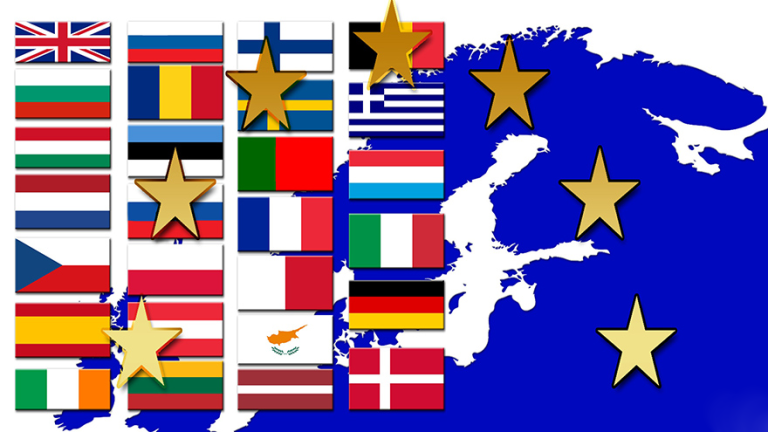

Europe
According to many scientists, the beginnings of Europe go back to antiquity, and there specifically to the freedom and democracy of the Greeks. Others consider the foundations laid as late as in the Middle Ages. But the settlement of the area we call Europe today began far earlier. The key periods of our European history are to explain how Europe became what it is today.
Learn more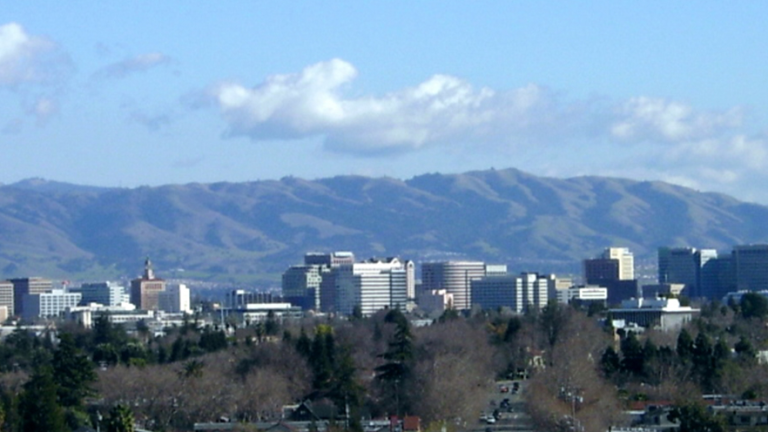

Silicon Valley
The famous Golden Gate Bridge runs across the San Francisco Bay into one of the most beautiful cities of America. And into one of the world’s richest regions. Around the bay, the headquarters of the leading global corporations of the digital era are located.
Learn more

Hansa
Since the 11th century the population in Europe was growing. The reason for it was, among other things, an increase in agricultural production due to a good climate.
Learn more

Franks
The Franks presumably arose from various western Germanic tribes originally living between the Rhine and Weser rivers.
Learn more

Celts
The term “Celts“ refers to a great number of different ethnic groups. So we do not speak of one “Celtic people”, at any rate not according to modern ethnic criteria, but rather of tribes within the circle of Celtic culture.
Learn more
MedienLB has been producing award-winning school films and interactive modules for the classroom since 2006.


Thirty Years’ War
For thirty years war was waged in an area where Germany and Austria are located today.
Learn more
