







 Economy

46500906 / 55500662
Monetary System
Currency, Foreign Exchange and Central Bank
For many hundreds of years, means of payment have been used for the exchange of goods. Initially, shells, silver or gold were offered as payment. Today money still fulfils the same purpose, but its form and complexity have changed profoundly.
Original soundtrack Prof. Dr. Timo Wollmershäuser, ifo Institute:
“The most important function of money is that of a means of payment. Money usually consists of banknotes, coins or maybe money in our bank accounts. Basically, we use money every day to buy things. It’s our means of payment, so we can purchase goods and services in a supermarket or in stores with it.”
With money, a distinction is made between money in the bank, the so-called credit money, or cash. Cash is still very popular with people.
Original soundtrack Dr. Jens Weidmann, President of the German Central Bank:
“It is a simple and safe means of payment, and many people appreciate it because they don’t need technology for it and they don’t have to disclose any personal information.”
There are over 160 cash currencies around the world. The currency zone defines the area of validity of the respective coins and notes.
Original soundtrack Prof. Dr. Timo Wollmershäuser, ifo Institute:
“This is regulated, for instance, with the Bundesbank Act in Germany. It includes a section according to which the euro is the legal tender in Germany. I think there is a similar regulation in every country of the world. They all have laws determining what currency, what means of payment has to be accepted by shops for purchases.”

Curriculum-centred and oriented towards educational standards
Matching


Blogging
The weblog or blog, for short, as a medium is not much older than this century. Blogs came into being in the World Wide Web as ’messages from below’, as web pages from web creators who wanted to share their view of the world with the world. They are short notes, long texts, pictures, videos, which are posted loosely and at random intervals to the world for an undefined public.
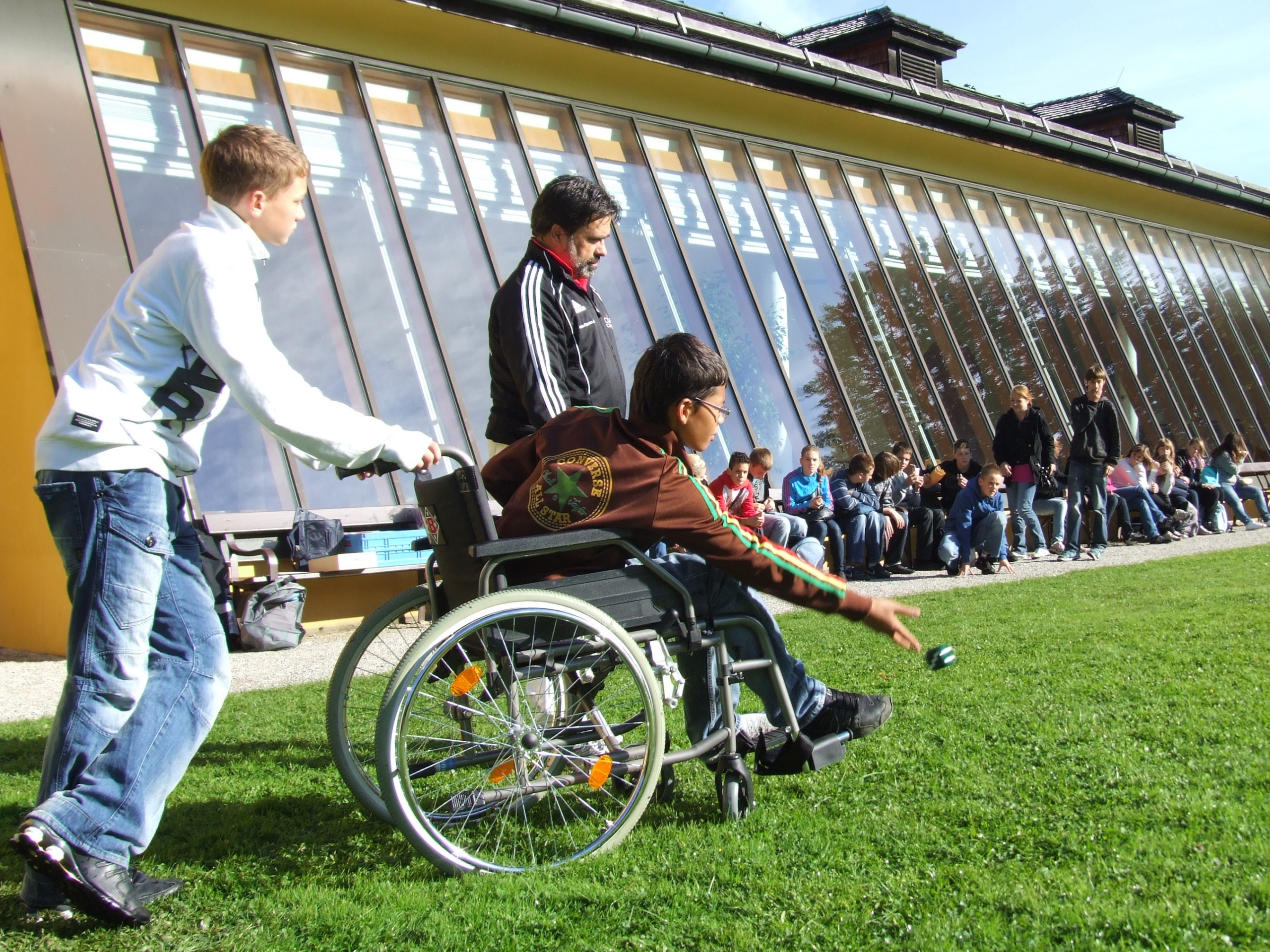
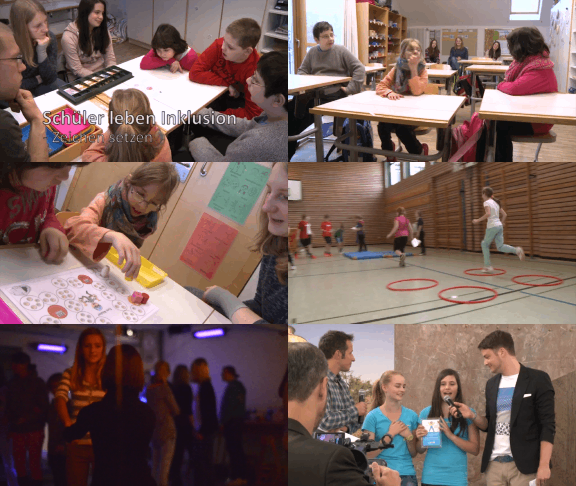
Pupils Practise Inclusion
When people come together, no matter under what concomitant circumstances – ultimately, it is about how these people meet and how openly they interact with one another.
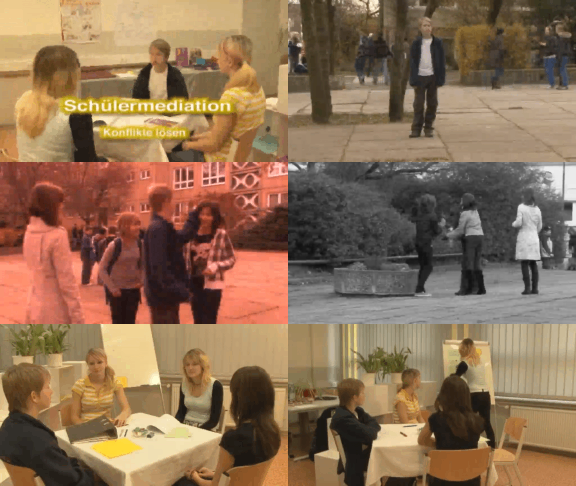
Peer Mediation
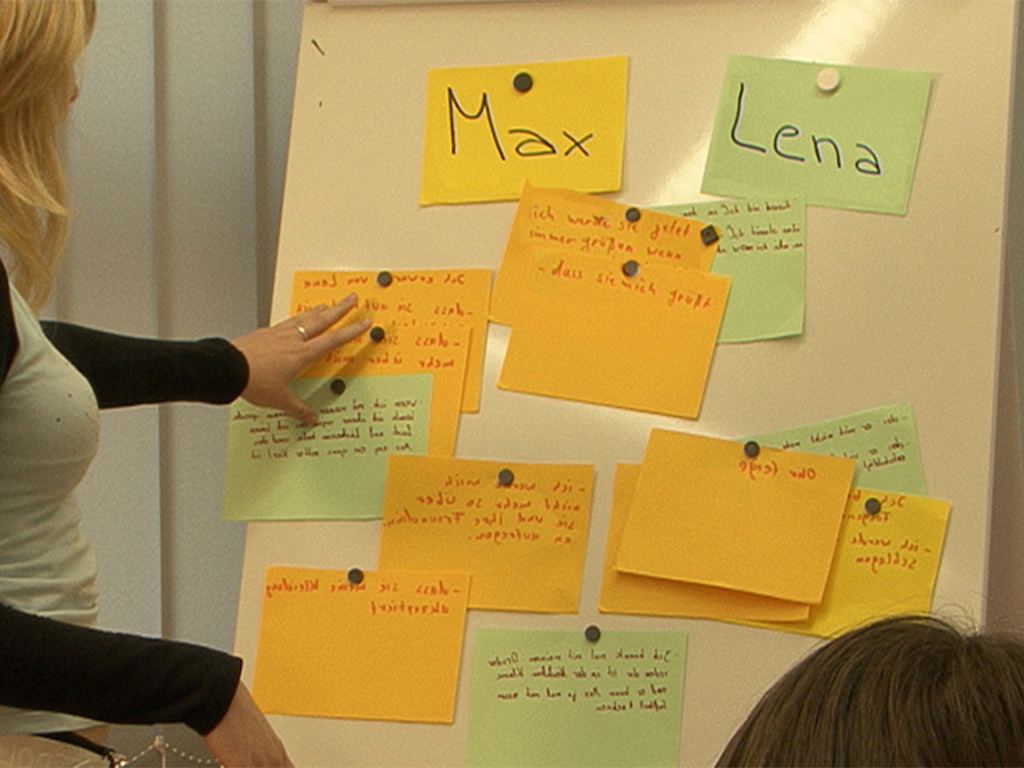
Lena and Max attend the 7th form. Max is new in class. During a break, Max notices that Lena and her friend are laughing at him again. Max loses his temper! He slaps Lena in the face. That hurts and Lena runs back into the classroom with a red cheek. The growing conflict between the two has escalated. Just like Lena and Max, every day pupils all over Germany have rows with each other. At the Heinrich Hertz Gymnasium in Thuringia, pupils have been trained as mediators for years. At set hours, they are in a room made available by the school specifically for mediation purposes. The film describes the growing conflict between Max and Lena and shows a mediation using their example. In doing so, the terms “conflict” and “peer mediation” are explained in a non-technical way. The aims of peer mediation and its progress in five steps as well as the mediators’ tasks are illustrated. The art of asking questions and “mirroring”, which the mediators must know, is described and explained. Together with the comprehensive accompanying material, the DVD is a suitable medium to introduce peer mediation at your school, too.