







 Primary School

4662227 / 5552804
Games
Development, Types and Rules
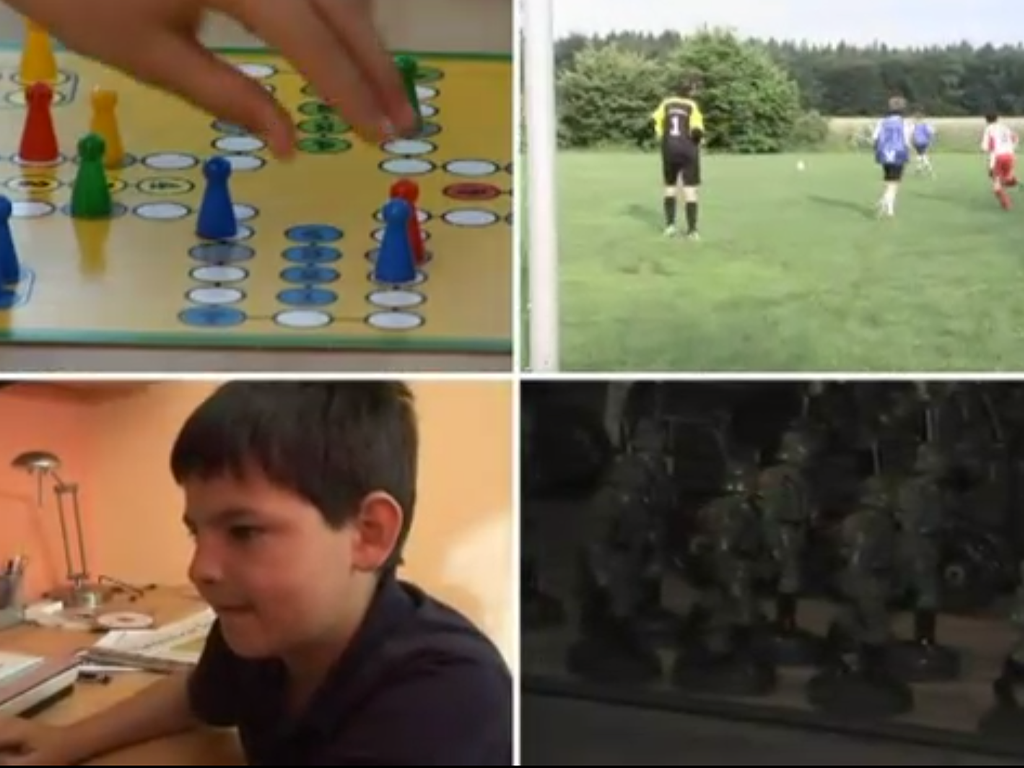
There are many different types of games. Board games, guessing games, waiting games, games of skill, sports games or computer games, too. We play because it is fun, we like activities with others and because we wish to pass our time in a pleasant way. The film gives an overview of the different types of games. It illustrates what you need to play parlour games and how a game is created. The characteristics of sports games are explained and a special emphasis is put on the problems arising when teams are selected and assembled. The film also explains the aspect of “fair play”. Further, the film also outlines the development of computer games, starting with pixelated graphics and simple games and moving on to current graphics, which are almost life-like today, and comprehensive virtual worlds. From the toys used in ancient cultures to today’s games, the film gives a sound overview of the development and the progress made. With its comprehensive didactic worksheets and suggestions for international games, this DVD is perfectly suited for use at schools.
Play trailer
- <> Languages : DE, EN, TR
- <> Target Groups : FÖ, GRU
- <> Subject : Primary School
- <> Length : 16:25 min
- View in learning platform
Licenses

Curriculum-centred and oriented towards educational standards
Matching


Air Traffic
Being able to fly has been a dream of humanity from time immemorial. But it does not even date back a century that people actually started being able to travel through the air. Since the 1960s, the number of flight passengers has been constantly increasing. Thus, the airspace is no longer dominated by birds but by man-made flying objects.


Blogging
The weblog or blog, for short, as a medium is not much older than this century. Blogs came into being in the World Wide Web as ’messages from below’, as web pages from web creators who wanted to share their view of the world with the world. They are short notes, long texts, pictures, videos, which are posted loosely and at random intervals to the world for an undefined public.

Computer Games
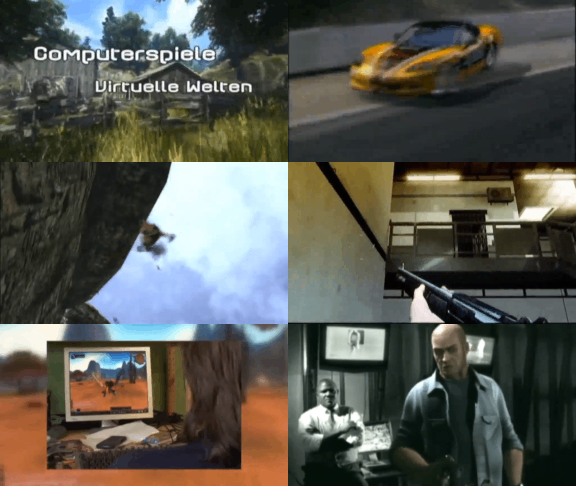
This film covers the topic of computer games in a variety of ways and from many different angles. Apart from the fascina- tion of computer games for users, the historical development as well as the production of computer games are described. The established genres are introduced, the guidelines of the German BPjM are explained. In light of recent public discussions, a neutral overview of the pros and cons of playing computer games is given, and different kinds of player behaviour are outlined. In this film, the pupils will recognise many aspects of their favourite pastime that encourage an independent, constructive use of this medium and reinforce their media competency. The film and teaching material are very closely related to the real-life situation.