







 Politik / Sozialkunde, Wirtschaft


4675533 / 5563681
Sozialismus
Gleichheit, Solidarität, Gerechtigkeit?
Der Unterrichtsfilm beleuchtet die Grundlagen des Sozialismus, der als Gesellschaftsmodell auf Gemeineigentum und Gemeinwirtschaft beruht. Er hielt infolge der Industrialisierung als Gegenmodell zum Kapitalismus Einzug. Doch in den Ländern, wo sich der Sozialismus verbreitet hatte, erwies er sich als ökonomisch ineffizient und führte letztlich zur Einschränkung der menschlichen Grundrechte sowie zur Verletzung der Rechtsstaatlichkeit.
Am Beispiel der DDR wird der der real existierende Sozialismus in all seinen schlechten, aber auch guten Facetten beleuchtet. Dr. Gregor Gysi, Dr. Wolfgang Thierse und Jörg Drieselmann geben authentische Einblicke. Prof. Dr. Hans-Werner Sinn nimmt aus ökonomischer Sicht Stellung. Ein Satz von Gregor Gysi zum Thema Deutsche Einheit macht nachdenklich: „Wenn man gesagt hätte, 90 % muss weg, aber zehn Sachen sind vernünftig, die übernehmen wir für ganz Deutschland, hätten wir eine andere Art der Vereinigung gehabt. Übrigens auch für die Westdeutschen, weil die Westdeutschen dann gesagt hätten: Dank der Einheit hat sich in diesen zehn Punkten meine Lebensqualität erhöht. So ein Erlebnis wurde ihnen nicht gegönnt.“
Gemeinsam mit dem didaktischen Begleitmaterial (klassische und interaktive Arbeitsblätter und Testaufgaben) ist der Unterrichtsfilm bestens zum Einsatz im Unterricht geeignet.
Trailer abspielen
- <> Sprachen : DE, EN, TR
- <> Zielgruppen : Sek I, Sek II
- <> Fach : Politik / Sozialkunde, Wirtschaft
- <> Spieldauer : 32:02 min
- In Lehrmediathek ansehen
Lizenzen

Lehrplanzentral und an den Bildungsstandards orientiert
Passend dazu
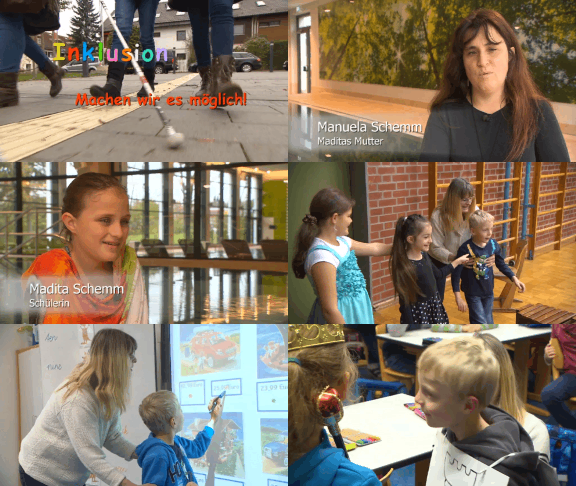
Inclusion
Madita is eleven and blind. She does not want to go to a special school but to a regular grammar school. She says she feels "normal" there. Jonathan is eight and has a walking disability. He likes going to the school where he lives. Here, his best friend sits next to him. Max Dimpflmeier, a teacher who is severely deaf, explains that school life is not easy. Quote Max Dimpflmeier: "You don't want to attract attention, you want to avoid saying that it is necessary for you that 70 people adjust to your situation." People on their way to inclusion.


Mobile Learning II
Oh, what’s that? Original soundtrack Thissen: “As our children grow up in a media world and naturally handle the media, they should also be a topic in school.“ An older child says the point is that they don’t just load down apps but create things themselves that haven’t existed so far. Hi, I’m Jana. A propeller hat. I’ll put it on. Now I’m no longer a simple rhino, but a flying rhino. Original soundtrack Thissen: “It’s exactly the great flexibility of tablets that promotes very personalised and adapted learning.” Original soundtrack Welzel: “It’s fascinating to see how the children grow with their products and how they always want to improve them.” The Westminster Abbey is a church in London for the royal family. Original soundtrack Welzel: “And?“ They think it is ok.
Podcasting
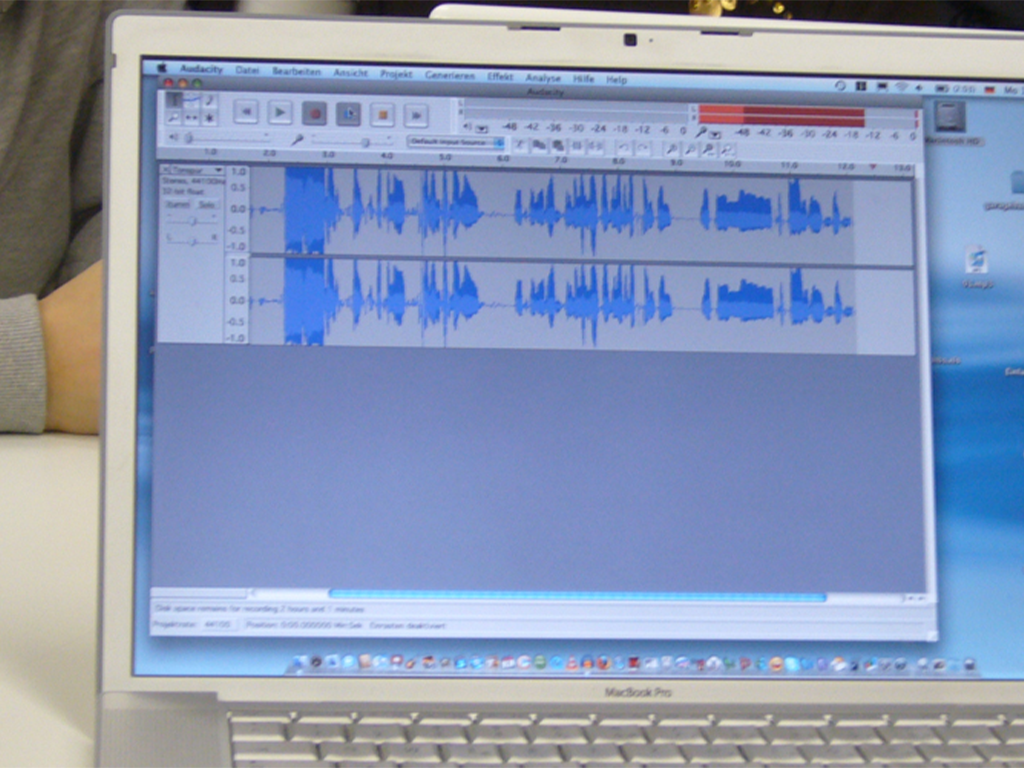
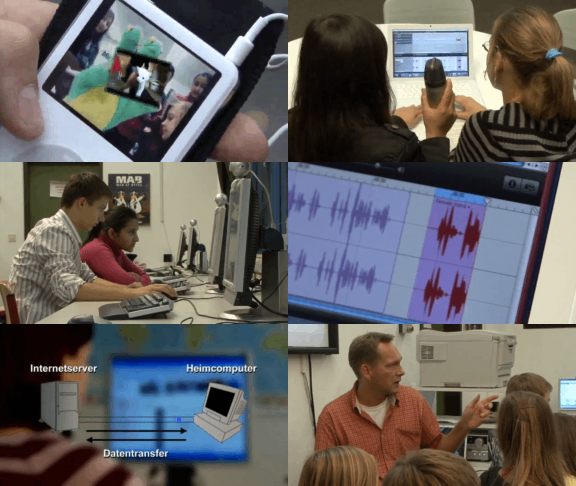
Today, the use of new media has become a matter of course not only in everyday life – schools and teaching, too, benefit from the new technologies and methods, which support active and independent learning. Especially in computer science, ethics and language courses but also in all other subjects, modern media are a valuable pedagogic and didactic asset. This DVD uses the example of podcasts to demonstrate how the possibilities opened up by new media can be applied in the classroom and how the pupils can be taught to handle them in a competent and target-oriented manner. The film is aimed at supporting the use of podcasts at school and encourages making them. This also requires the ability to find information on the Internet and assess it. The film informs on the functionality of podcasts and technical background as well as on the teaching and learning possibilities offered by podcasts – ranging from specific contents to superordinate learning targets such as the advancement of creativity and team spirit. The DVD is a useful support for teachers applying new media and wishing to show their pupils how to handle Running Time: 20:29 ms them in a sensible way.
