





Gesellschaft, Lehrerfortbildung
4670855 / 5560961
Lerntypen
Typen und Methoden
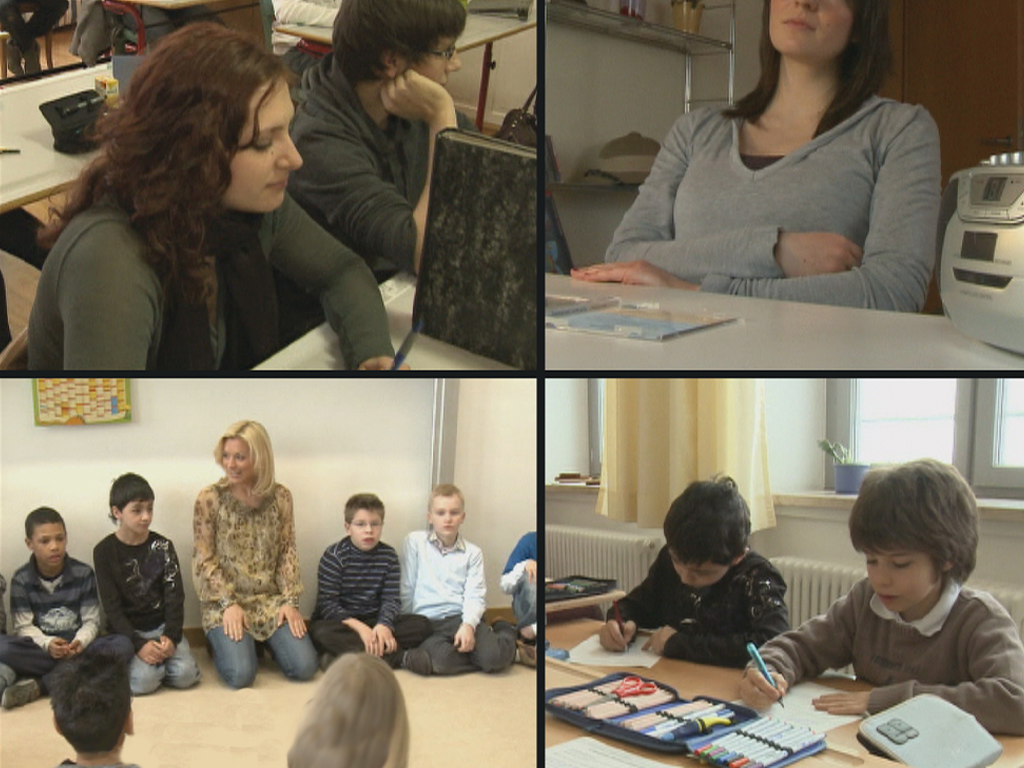
„Schau dich schlau!“: Wenn Kinder in der Schule schneller oder langsamer lernen, dann hat das nichts mit ihrer Intelligenz zu tun, sondern damit, dass es vier verschiedene Lerntypen gibt, die dafür unterschiedliche Bedingungen benötigen. Es gibt auditive, visuelle, kommunikative und motorische Lerntypen. Zum effektiven Lernen ist eine möglichst große Beteiligung und Nutzung aller Sinne am sinnvollsten. Ein gezieltes Wissen um den eigenen Lerntypus erleichtert das Lernen und kann bessere Noten zur Folge haben. Häufig gibt es auch Mischformen der Lerntypen. „Schau dich schlau!“: Auf dem Prüfstand: Spickzettel. Die Schüler von heute rüsten technisch auf. Neben den klassischen Methoden gibt es immer mehr Hightech-Spicker. „Schau dich schlau!“: Moderator Fero Andersen testet, ob wir in der Schule wirklich fürs Leben lernen. Wie lange hält das gepaukte Wissen vor? Er verwandelt eine Fußgängerzone in ein großes Klassenzimmer und stellt scheinbar einfache Fragen aus der ersten Klasse. Das haben wir alle mal gelernt. Doch wissen die Befragten wirklich die Antworten?
Trailer abspielen
Lehrplanzentral und an den Bildungsstandards orientiert
Passend dazu

Internet Addiction
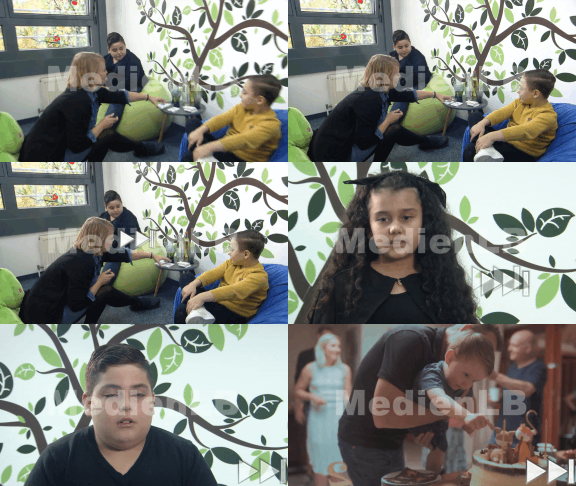
The film consists of two parts. The first part is the 15-minute short film “In the Net”. It describes the problem of excessive Internet use in a humorous way, in particular the risk of losing touch with reality when chatting. The second part illustrates with three real persons how Internet addiction can develop and the problems encountered by those who are afflicted. The authentic statements are commented by an experienced therapist. For many pupils, the issues addressed here are related to their everyday lives. What is a “sensible” use of the Internet, where does pathological addiction start? In contrast to addiction to alcohol, nicotine or drugs, the public seems to be largely ignorant of the problem of this addiction, which is not related to any substance abuse. The film provides material for discussion in the classroom (crossdisciplinary) and can be used as a basis for the formulation of prevention strategies.
Peer Mediation
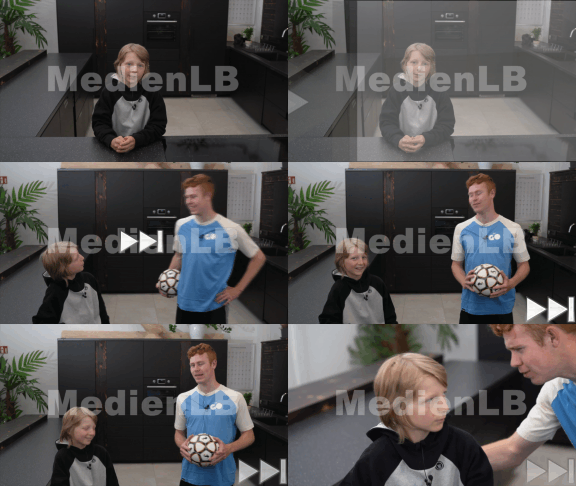
Lena and Max attend the 7th form. Max is new in class. During a break, Max notices that Lena and her friend are laughing at him again. Max loses his temper! He slaps Lena in the face. That hurts and Lena runs back into the classroom with a red cheek. The growing conflict between the two has escalated. Just like Lena and Max, every day pupils all over Germany have rows with each other. At the Heinrich Hertz Gymnasium in Thuringia, pupils have been trained as mediators for years. At set hours, they are in a room made available by the school specifically for mediation purposes. The film describes the growing conflict between Max and Lena and shows a mediation using their example. In doing so, the terms “conflict” and “peer mediation” are explained in a non-technical way. The aims of peer mediation and its progress in five steps as well as the mediators’ tasks are illustrated. The art of asking questions and “mirroring”, which the mediators must know, is described and explained. Together with the comprehensive accompanying material, the DVD is a suitable medium to introduce peer mediation at your school, too.